Ever wondered what keeps power systems in factories, data centers, or high-voltage panels from literally burning out?
It’s not just cooling fans or expensive machinery. It’s a small, robust device called the Busbar Temperature Sensor—the unsung hero of electrical health and safety. Let’s break it down.
What Is a Busbar Temperature Sensor, Really?
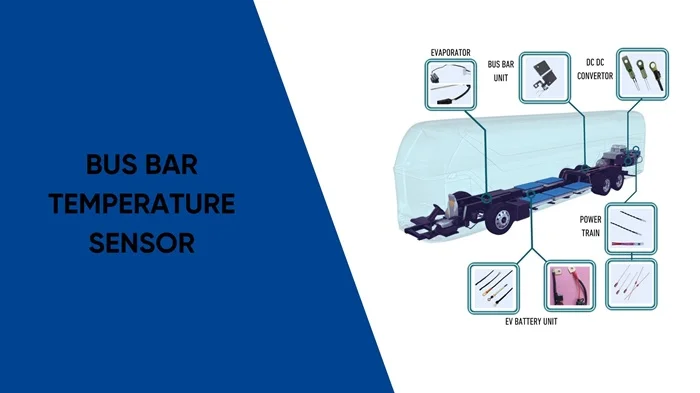
A busbar temperature sensor is designed to monitor the temperature of busbars—those solid metal bars that carry large electrical currents inside switchboards, distribution panels, or industrial control centers.
These busbars heat up under load. And too much heat? That’s a recipe for fire, downtime, or worse—complete equipment failure.
That’s why busbar temperature monitoring is a big deal in industrial environments.
But Wait—Why Do Busbars Heat Up?
Here’s what causes heat buildup:
| Cause | Impact |
| High current loads | Overheating, energy loss |
| Loose connections | Localized hot spots |
| Oxidation or corrosion | Increased resistance → more heat |
| Faulty insulation | Risk of short circuits, arc faults |
Without real-time temperature tracking, these issues go unnoticed until it’s too late.
The Role of Busbar Temperature Sensors in Monitoring
So, what exactly does a busbar temperature sensor do?
1. It continuously monitors surface temperature.
2. It sends real-time data to your control system (SCADA/BMS).
3. It helps trigger alerts before things get dangerous.
In short? It helps predict failures before they happen.
Where Are These Sensors Used?
You’ll find busbar temperature monitoring in places where uninterrupted power and safety are non-negotiable:
- Power distribution panels
- Switchgear cabinets
- Data centers
- EV battery management systems
- Renewable energy stations (solar, wind)
- Railways & electric substations
- Heavy manufacturing units
Basically, if current is flowing through metal at high loads, you want one of these.
Why Choose JR Sensors for Busbar Monitoring?
At JR Sensors, we don’t believe in one-size-fits-all. Our busbar temperature sensors are:
- Custom-designed for OEMs and industrial setups
- Built for high accuracy (±0.5°C typical)
- Designed for non-intrusive installation
- Offered in both wired and wireless configurations
- Calibrated to work with extreme electrical environments
We work directly with OEMs, tailoring every sensor for form factor, insulation rating, material compatibility, and more.
Wired vs Wireless Busbar Sensors: What’s Best for You?
| Feature | Wired Sensors | Wireless Sensors |
| Installation | Slightly complex | Plug & play / retrofit |
| Data Transmission | Stable, continuous | Via Bluetooth/LoRa/IoT-based |
| Power Source | Uses system power | Needs battery or energy harvesting |
| Ideal For | New builds, controlled setups | Retrofitting, remote panels |
Your application decides what’s right for you, and we help guide that call.
Busbar Temperature Monitoring = Peace of Mind
Busbar temperature monitoring isn’t just about numbers on a screen. It’s about:
- Avoiding fire hazards
- Reducing unscheduled downtime
- Improving energy efficiency
- Extending equipment life
- Complying with safety standards (IEC, IEEE, etc.)
And let’s face it—proactive sensing beats reactive fixing.
Final Thoughts: Small Sensor, Big Responsibility
The next time someone walks past a big humming electrical panel, they probably won’t even notice what’s quietly protecting the whole setup. But you will.
That little busbar temperature sensor? It’s watching, measuring, and protecting.