With cars becoming far more than mere mechanical machines, and the introduction of computers and sensors becoming more critical, sensors have become a big part of the car. In present-day cars, there are dozens (and in some cases hundreds) of sensors that constantly measure all sorts of parameters and feed crucial information to the engine control unit (ECU) and other onboard computers. These are the eyes and ears of the car, which guarantee the best functioning, the most appropriate fuel consumption, safety and comfortable driving. A glance at the varieties of automotive sensors and their respective purposes will go a long way in helping one recognise the sophistication and the smarts of the modern-day vehicle.
The Brains Behind the Operation: The Engine Control Unit (ECU)
The Engine Control Unit (ECU), also known as the brain of a car, is at the centre of the sensor network in a car. In real time, the ECU gets input data acquired by different sensors around the car. It receives this information, compares it against pre-programmed parameters, and then provides commands to actuators (components that execute actions, such as fuel injectors or spark plugs) to enable the engine to run efficiently, handle emissions, and safety systems, etc. The lack of proper sensor data would make the ECU blind, and it would not be able to make decisions.
Key Types of Automotive Sensors and Their Functions
Automotive sensors can be broadly categorised by the systems they monitor:
1. Engine Management Sensors: Ensuring Optimal Performance and Efficiency
These sensors are crucial for the efficient and clean operation of the internal combustion engine.
- Oxygen (O2) Sensors / Lambda Sensors:
- Function: Located in the exhaust system, these sensors measure the oxygen content in the exhaust gases. This data indicates how rich or lean the air-fuel mixture is.
- Impact: The ECU uses this information to adjust the fuel injection timing and amount, ensuring the engine runs at an optimal stoichiometric (ideal) air-fuel ratio for complete combustion and reduced emissions. Modern cars typically have multiple O2 sensors (before and after the catalytic converter).
- Mass Air Flow (MAF) Sensor:
- Function: Measures the amount (mass) of air entering the engine's intake manifold.
- Impact: This is a fundamental input for the ECU to calculate the precise amount of fuel needed for combustion. An accurate MAF reading is vital for correct air-fuel mixture, fuel economy, and power output.
- Manifold Absolute Pressure (MAP) Sensor:
- Function: Measures the absolute pressure inside the intake manifold. This is an alternative or supplementary sensor to the MAF, especially in speed-density fuel injection systems.
- Impact: Helps the ECU determine engine load and adjust fuel delivery and ignition timing accordingly.
- Throttle Position Sensor (TPS):
- Function: Monitors the position of the throttle valve, which controls the amount of air entering the engine.
- Impact: Informs the ECU of the driver's power demand, allowing it to adjust fuel injection and ignition timing for smooth acceleration and deceleration.
- Crankshaft Position Sensor (CKP) / Camshaft Position Sensor (CMP):
- Function: The CKP sensor monitors the rotational speed and position of the crankshaft, while the CMP sensor tracks the position of the camshaft(s).
- Impact: These sensors are critical for synchronised fuel injection and ignition timing, ensuring the engine cylinders fire at the correct moments. They are also used to detect misfires.
- Engine Coolant Temperature (ECT) Sensor:
- Function: Measures the temperature of the engine coolant.
- Impact: Essential for cold-starting enrichment (adding more fuel when the engine is cold), radiator fan control, and displaying engine temperature on the dashboard. Overheating protection relies heavily on this sensor.
- Knock Sensor (KS):
- Function: Detects vibrations caused by engine knocking or pre-ignition (premature ignition of the air-fuel mixture).
- Impact: If knock is detected, the ECU retards ignition timing to prevent engine damage, even at the cost of slight power reduction.
- Fuel Pressure Sensor:
- Function: Monitors the pressure of fuel in the fuel rail or fuel tank.
- Impact: Ensures consistent fuel delivery to the injectors, vital for stable engine operation and performance.
2. Transmission and Drivetrain Sensors: Smooth Power Delivery
These sensors ensure the smooth and efficient transfer of power from the engine to the wheels.
- Transmission Fluid Temperature Sensor:
- Function: Measures the temperature of the transmission fluid.
- Impact: High temperatures can damage the transmission. This sensor helps the transmission control unit (TCU) manage fluid cooling and optimise shift points.
- Transmission Input/Output Speed Sensors:
- Function: Measure the rotational speeds of the transmission's input and output shafts.
- Impact: Crucial for the TCU to determine gear ratios, optimise shift points, and ensure smooth gear changes.
- Wheel Speed Sensors (ABS Sensors):
- Function: Measure the rotational speed of each wheel.
- Impact: While primarily known for their role in Anti-lock Braking Systems (ABS), they are also fundamental for Traction Control Systems (TCS) and Electronic Stability Control (ESC) by detecting wheel slip.
3. Safety and Chassis Sensors: Protecting Occupants and Controlling Dynamics
These sensors are vital for active and passive safety systems.
- Wheel Speed Sensors (detailed here for safety):
- Function: As mentioned, these sensors detect the speed of each wheel.
- Impact: In ABS, they allow the system to prevent wheel lock-up during hard braking. In TCS, they prevent wheel spin during acceleration. In ESC, they help the system detect and correct skids by applying individual brakes.
- Steering Angle Sensor:
- Function: Measures the rotational angle of the steering wheel.
- Impact: Crucial for ESC and electric power steering (EPS) systems to understand the driver's intended direction.
- Yaw Rate Sensor:
- Function: Measures the rotational speed of the vehicle around its vertical axis (i.e., how much the car is rotating or skidding).
- Impact: In conjunction with the steering angle sensor and wheel speed sensors, it provides critical data for the ESC to detect and correct oversteer or understeer.
- Lateral Acceleration Sensor (G-Sensor):
- Function: Measures the force acting on the vehicle from side to side (cornering forces).
- Impact: Used by ESC to understand the car's dynamic behaviour during turns.
- Airbag Crash Sensors:
- Function: Accelerometers or pressure sensors located in various parts of the vehicle are designed to detect sudden deceleration or impact.
- Impact: Trigger the deployment of airbags and seatbelt pretensioners in the event of a collision.
- Tire Pressure Monitoring System (TPMS) Sensors:
- Function: Integrated into each wheel, these sensors monitor tire pressure.
- Impact: Alert the driver to underinflated tires, improving safety, fuel economy, and tire life.
4. Comfort, Convenience, and Driver Assistance Sensors: Enhancing the Driving Experience
Modern vehicles are increasingly equipped with sensors for driver comfort and advanced driver-assistance systems (ADAS).
- Rain Sensor:
- Function: Uses infrared light to detect moisture on the windshield.
- Impact: Automatically activates and adjusts the speed of the windshield wipers.
- Light Sensor / Ambient Light Sensor:
- Function: Detects ambient light levels.
- Impact: Automatically turns headlights on/off and adjusts dashboard illumination.
- Parking Sensors (Ultrasonic or Radar):
- Function: Emit ultrasonic waves or radar signals to detect obstacles around the vehicle.
- Impact: Provide audible warnings to the driver during parking manoeuvres, preventing collisions.
- Radar Sensors (for ADAS):
- Function: Emit radio waves to detect the presence, distance, and speed of other vehicles or obstacles.
- Impact: Used in Adaptive Cruise Control (ACC), Forward Collision Warning (FCW), and Blind Spot Monitoring (BSM) systems.
- Camera Sensors (for ADAS):
- Function: A Digital camera captures images and processes them.
- Impact: Used for Lane Departure Warning (LDW), Lane Keeping Assist (LKA), Traffic Sign Recognition, and Surround View camera systems.
- Infrared (IR) Sensors:
- Function: Detect heat signatures.
- Impact: Used in night vision systems to help drivers see pedestrians or animals in low light conditions.
The Future of Automotive Sensing
The automotive technology trend is indicative of even more tightly integrated and advanced sensor networks. The capacity of autonomous driving, advanced connectivity, and enhanced safety features will be strongly dependent on the convergence of data between various types of automotive sensors, such as Lidar, high-resolution radar, and advanced camera systems. Such sensors will not only be used in monitoring the internal condition of the car, but they will also enable a continuous perception and interpretation of the outside world, leading to safer and smarter transport.
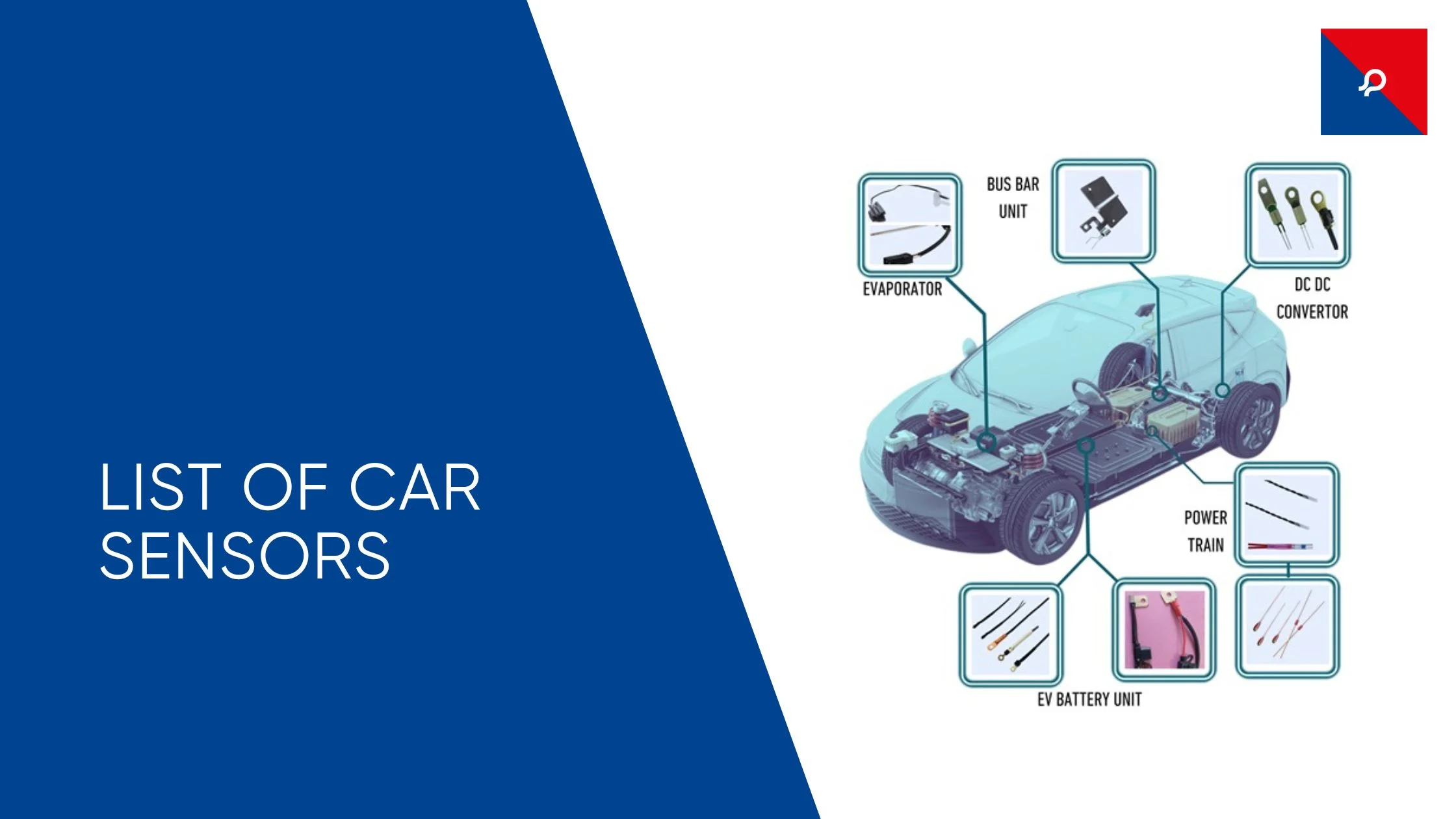
JR Sensors is a leader in automotive-grade temperature sensors, notably NTC thermistors, in EVs and traditional vehicles. They have a motor, battery, busbar, charger inlet, and AC evaporator sensors. These are highly accurate, application-specific sensors that improve performance, safety and energy consumption and comply with international standards and can resist severe environments.