Thermodilution Catheters in the ICU: Real-Time Monitoring When It Matters Most
Thermodilution Catheters in the ICU: Real-Time Monitoring When It Matters Most
Every second matters in the Intensive Care Unit (ICU), which is a high-stakes environment. The patients are on the verge of death, and everything can change at any moment. This is the reason why clinicians use the latest products in monitoring the cardiovascular activity in real time. The Thermodilution Catheter is one of these important tools. The Thermodilution Catheter might not be a term you would use every day of the week, but when a patient is in dire need and the race against time starts, the device takes centre-stage.
Why the Thermodilution Catheter is so critical in the ICU. Let me explain why the call about the thermodilution catheter is so critical in the ICU, how the catheter works, and why real-time hemodynamic monitoring may be a matter of life or death.
What is a Thermodilution Catheter?
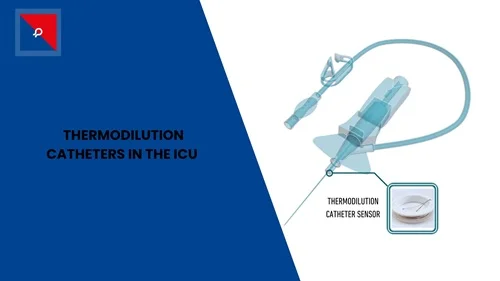
Pulmonary artery catheter, or Thermodilution Catheter as it is also referred to (also known as a Swan-Ganz catheter), is a special chest line, implanted into the patient, that is specific to measuring cardiac output, as well as other measurements that are related to hemodynamics. The Thermodilution Catheter is used and inserted through one of the larger veins, preferably either the internal jugular vein or the subclavian vein and directed into the pulmonary artery.
Once inserted, the Thermodilution catheter will give them constant information regarding the status of the heart, and as a result, health professionals will be able to monitor the cardiac output, pulmonary artery pressure and the mixed oxygen saturation in the blood.
By putting it simply, the Thermodilution Catheter is a real-time laboratory.
Why Use a Thermodilution Catheter in the ICU?
The main causes of critical illness in patients include labile pressure, sepsis, heart failure, or fluid imbalances. The Thermodilution Catheter assists in fulfilling the objective of tracking such parameters accurately by the ICU teams. It is essential in the management of complicated cases, considering its potential to offer real-time bedside data.
Here are a few situations where a Thermodilution Catheter is vital:
- Septic shock: Determining fluid responsiveness.
- Heart failure: Monitoring cardiac output.
- Major surgery recovery: Assessing post-op hemodynamics.
- ARDS (Acute Respiratory Distress Syndrome): Tracking oxygenation efficiency.
Using a Thermodilution Catheter, clinicians can tailor treatments with accuracy, adjusting fluids, medications, or interventions based on hard data instead of guesswork.
How Does the Thermodilution Method Work?
The working principle of the Thermodilution Catheter is fairly simple, but so dang practical. A predetermined quantity of cooled saline (or some other liquid) is put into the circulatory system through the tube. As this fluid combines with the blood, it creates a temperature drop, which in turn is measured in the catheter downstream by a thermistor.
The rate of temperature change is applied to determine cardiac output. The isothermal technique is reliably repeatable and is referred to as the thermodilution method.
Recent variants of the Thermodilution Catheter even monitor cardiac output on a continual basis with the help of thermal filament technology, and there is no longer a necessity for any repeated manual injection.
Advantages of the Thermodilution Catheter in Real-Time ICU Monitoring
There’s no room for error in critical care. That’s where the Thermodilution Catheter shines.
Here are the key advantages:
- Continuous Monitoring: Real-time data helps guide immediate clinical decisions.
- Comprehensive Hemodynamics: It gives insight into both preload and afterload conditions.
- Titrated Therapies: Medications like vasopressors or inotropes can be finely adjusted.
- Guided Fluid Management: Prevents over- or under-resuscitation.
- Multifunctionality: Modern Thermodilution Catheters offer SvO₂, temperature, and even pressure waveforms in one device.
Every ICU team benefits from having a Thermodilution Catheter in their diagnostic arsenal.
Thermodilution Catheter: Risks and Considerations
Like any invasive procedure, using a Thermodilution Catheter comes with risks. Potential complications include:
- Infection at the insertion site
- Arrhythmias during insertion
- Pulmonary artery rupture (rare but serious)
- Thrombosis or embolism
That's why it's essential to weigh the risks and benefits. Proper training and sterile techniques significantly reduce complications related to Thermodilution Catheter use.
Technology Advancements in Thermodilution Catheters
The Thermodilution Catheter has a bright future. Most of the current ICU configurations employ the use of Thermodilution Catheters coupled with Smart monitors with automatic calculators and trend graphing of hemodynamics. They are also coming through wireless and AI-primed interpretation that enables care teams to forecast the onset of deterioration in patients before their needs become dire.
The Thermodilution Catheter, even with the availability of new technology, such as echocardiography and non-invasive monitors, is sometimes still used as a gold standard. Why? It is about precision, credibility and taking rapid decisions when human lives are at stake.
Real-Life Application: A Case Scenario
Take an example of a 68-year-old patient experiencing septic shock with a blood pressure of 80/50 mmHg. The fluids are given out, but the oxygenation is low in the patient, and the lactic acid level is increasing. On insertion of a Thermodilution Catheter by the ICU team, a low cardiac output and poor venous return are detected.
They initiate inotropes and change ventilation armed with real-time data. In just a few hours, there was increased cardiac output, normal lactate levels, and the stabilisation of the patient. That is the power of an immediate reaction with the help of a Thermodilution Catheter.
Thermodilution Catheters in the ICU: Real-Time Monitoring When It Matters Most
JR Sensors provides high-precision sensing components for thermodilution catheters, crucial in ICU settings for real-time cardiac output monitoring. Their reliable temperature sensors ensure accurate thermodilution measurements, enabling critical hemodynamic assessments. JR Sensors supports rapid clinical decisions, enhancing patient care when every second counts.
Conclusion
The Thermodilution Catheter brings clarity in a hectic, busy ICU environment that moves very fast. It helps put the medical teams in control of real-time, precise, and actionable data when it counts the most. Influencing fluids in septic shock or complex heart conditions, the Thermodilution Catheter is one of the reliable and indispensable tools in critical care medicine.
Although not all patients require it, the ones who find it useful can even owe their lives to it due to the fast knowledge gained using it.