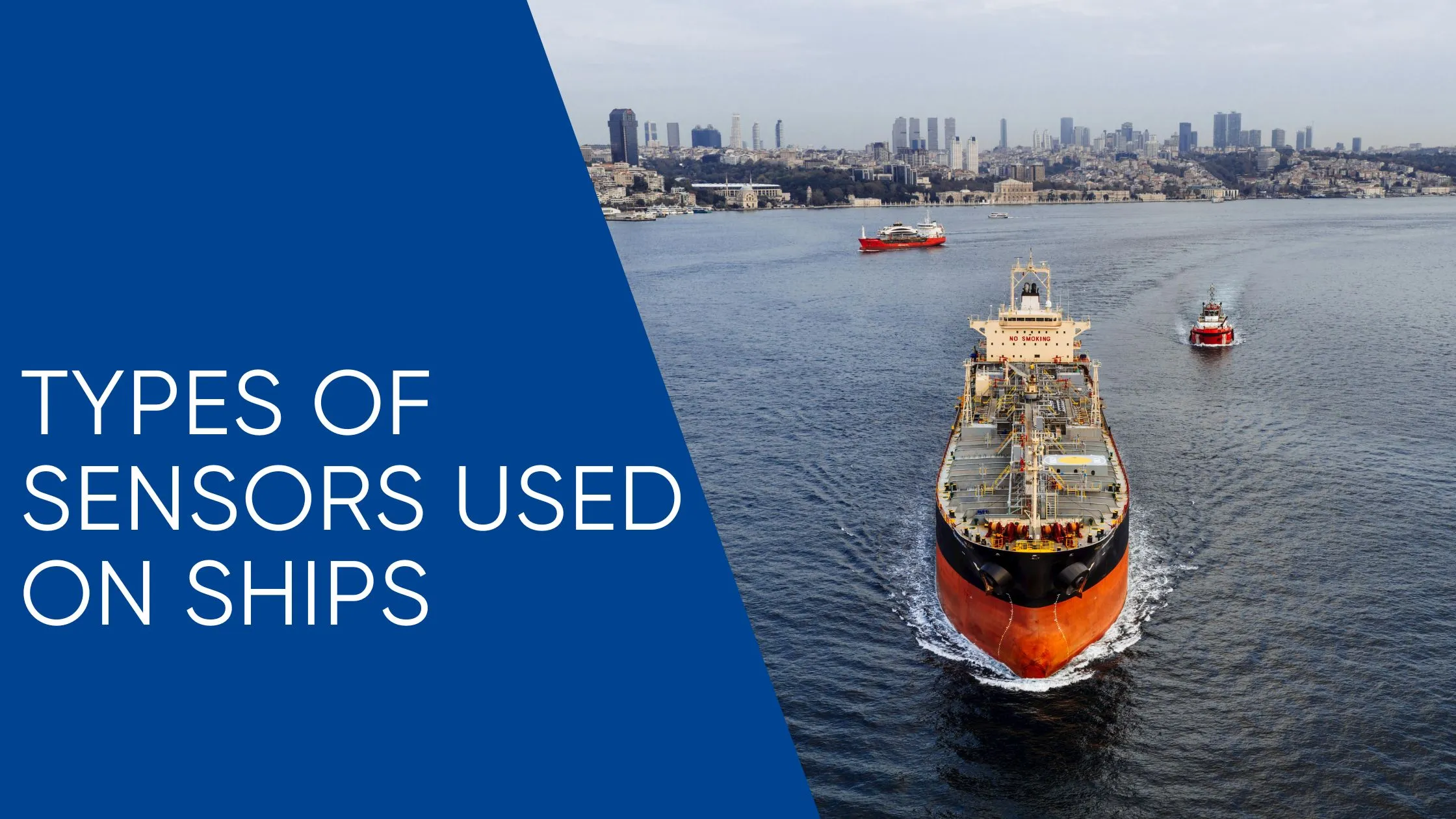
Ever wondered how these massive ships glide through wild oceans like they’ve got a mind of their own? Honestly, half the magic comes from something we barely notice, marine sensors working nonstop behind the scenes.
On every vessel, these marine sensors quietly read the water, the wind, and the engine. Basically, everything, so the crew doesn’t have to guess. And trust me, without marine sensors, navigation, safety, and performance would be pure chaos. So let’s talk about how these tiny geniuses keep a giant ship running smoothly.
Also Read: Top Applications of Temperature Sensors in Household
1. Sensors Used Onboard
When you step onto a ship, it may look calm and steady from the outside… but inside, it’s basically a floating data factory. Seriously, the number of marine sensors quietly collecting information every second is almost wild.
These marine sensors track everything: speed, depth, engine load, wind, and position, so the crew isn’t just “sailing by instinct,” they’re sailing with solid data. And today, shipping companies rely on these marine sensors just as much as captains do. Why? Because real-time numbers help them understand fuel usage, engine health, navigation risks, and overall vessel performance.
In short, onboard marine sensors work like the ship’s senses: they “feel,” “see,” “hear,” and report back instantly. Without them, a vessel would basically be blindfolded in the middle of the ocean.
2. Speed Log on Ship
If there’s one marine sensor that sailors trust, it’s the speed log. This little device tells you exactly how fast the ship is moving through water. Not the “Google Maps ka speed,” but the real, technical, ocean-tested speed.
A speed log is one of those marine sensors that works quietly but decides half the ship’s mood. Fuel planning, engine load, maneuvering… everything depends on knowing the right speed. And honestly, without this marine sensor, navigating a vessel feels like running on a treadmill without knowing how fast you’re actually going.
In short, the speed log keeps the bridge team confident, the engine room informed, and the ship moving safely in the right rhythm.
3. Echo Sounder on Ship
Now, if the ocean had a “What’s beneath me?” check button, the echo sounder would be it. This marine sensor literally sends sound waves down, waits for them to bounce back, and then tells you the exact depth under the keel. Super simple concept… super lifesaving in reality.
Among all marine sensors, this one feels the most like a sixth sense. Because when you’re sailing into a port, a narrow channel, or some sketchy shallow area, the echo sounder keeps whispering, “Relax… you’ve got 12 meters under you.”
Without this marine sensor, even experienced captains would be guessing what’s below and trust me, guessing and shallow water is a stress no one needs at sea.
4. RPM & Torque Meter
If ships had a fitness tracker, this would be it. The RPM and torque meter is that marine sensor which constantly checks how hard the engine is working and how smoothly the propeller is turning. Think of it like the ship’s heartbeat monitor. One quick look, and the crew instantly knows whether the engine is chilling, stressed, or straight-up overworking.
Among all marine sensors, this one is super important for fuel efficiency. Because when the torque spikes or the RPM fluctuates weirdly, it’s usually the engine’s polite way of saying, “Boss… check me before I break something.”
So yeah, this marine sensor doesn’t just show numbers, it literally helps prevent breakdowns, saves fuel, and keeps the whole machinery line running in a healthy rhythm.
5. Shaft Motor Sensor
The shaft motor sensor is one of those marine sensors that doesn’t get much spotlight, but wow, it does some serious heavy lifting behind the scenes. It keeps track of the motor driving the propeller shaft. Basically the part that converts all that engine power into actual movement.
This marine sensor constantly monitors speed, load, and performance so the crew knows whether the shaft motor is running smoothly or acting moody. And trust me, if something goes off here, the whole propulsion system feels it.
Among all marine sensors, this one quietly ensures that the ship’s power is being transferred efficiently, without any slip-ups, overheating, or weird vibrations that could turn into bigger issues later.
6. Thrust Meter
If you ever wondered how a ship knows whether all that engine power is actually pushing the vessel forward, the thrust meter is the hero. This marine sensor measures the real thrust produced by the propeller, not just the theoretical power on paper.
Among all marine sensors, this one feels very “no-nonsense.” It doesn’t care about assumptions. It shows the actual force moving the ship. And honestly, this helps the crew understand if the ship is performing efficiently or if something (like fouling, rough seas, or a tired engine) is messing with the output.
With this marine sensor, captains and engineers both get a clear picture of propulsion efficiency, fuel performance, and whether the ship is giving its best or just pretending to.
7. Rudder Indicator
Now, this is one of those marine sensors that looks super simple… but without it, maneuvering a ship would feel like steering blindfolded. The rudder indicator basically tells the crew the exact angle of the rudder. How much it’s turned, in which direction, and whether it’s actually responding the way it should.
Among all marine sensors, this one is like the captain’s best friend during tight turns, port approaches, or rough weather. One quick glance, and they know whether the ship will swing left, right, or stubbornly stay straight.
And honestly, when you’re steering something the size of a floating building, this marine sensor is what keeps everything predictable, smooth, and not “oops-I-turned-too-much” chaotic.
8. Stabilizer Fins Sensor
If you’ve ever been on a ship during rough weather, you know that one big wave can make the whole vessel feel like it’s doing a rollercoaster audition. That’s exactly why stabilizer fins exist. And the marine sensors attached to them make sure they behave properly.
This stabilizer fins sensor constantly checks the angle, movement, and position of the fins so the system can reduce rolling and keep everyone on board from walking like they’re drunk. Among all marine sensors, this one works almost silently in the background, but the comfort it brings? Chef’s kiss.
It basically tells the ship, “Don’t worry, I’ll balance you,” and honestly, without this marine sensor, sailing in waves would feel way more dramatic than it needs to be.
9. Wind Anemometer
Among all the marine sensors on a ship, the wind anemometer is the one that’s always wide awake. It constantly measures wind speed and direction. Because at sea, wind isn’t just “breeze”; it can totally decide how the ship moves, turns, or even burns fuel.
This marine sensor tells the bridge team whether the wind is helping, fighting, or just being dramatic for no reason. From plotting safe routes to adjusting speed, the anemometer’s data is basically the ship’s weather gossip hotline.
And honestly, without this marine sensor, predicting wind behaviour would be guesswork and trust me, guessing in the middle of the ocean is never a good plan.
10. GPS
The GPS probably the most “famous” of all marine sensors, but don’t let that make it feel ordinary. This little genius constantly tells the crew exactly where the ship is on the planet, down to the meter, no compass involved.
Among all marine sensors, the GPS is the navigator’s best friend. It helps plot routes, avoid hazards, and coordinate with ports and shipping companies. Basically, it turns the vast, endless ocean into a map you can actually trust.
Without this marine sensor, even the most experienced captain would feel like they’re wandering blind, especially on long ocean stretches or in tricky coastal areas. It’s the silent guide keeping every voyage on track.
Conclusion
Honestly, if you look closely, a ship is less a massive steel structure and more a floating network of marine sensors. Each one whether it’s the speed log, echo sounder, or stabilizer fins sensor is quietly working, collecting data, and keeping both the crew and shipping company in the know.
These marine sensors don’t just make life easier; they make it safer, more efficient, and way less stressful. From navigating tricky waters to monitoring engine health and fuel use, they’re the unsung heroes of every voyage.
At the end of the day, a ship with well-functioning marine sensors isn’t just moving it’s performing, predicting, and protecting, all at once.