Ever wondered why some resistors just seem to “fight back” when things heat up? I mean, seriously, it’s all about the ptc thermistor. These little devices aren’t your regular resistors. When the temperature rises, their resistance rises too. That’s basically the essence of what is positive temperature coefficient.
So, if you’ve ever heard someone say positive temperature coefficient thermistor or ptc sensor, don’t let it sound too fancy. It’s just a resistor that responds to heat in a very smart way. And yeah, for those curious, the ptc thermistor full form in electrical is “Positive Temperature Coefficient”. Stick around, because we’re going to break down how these things work, the types you’ll find, and why they’re used everywhere from heaters to motor protection.
What Is a PTC Thermistor? Definition & Working Principle
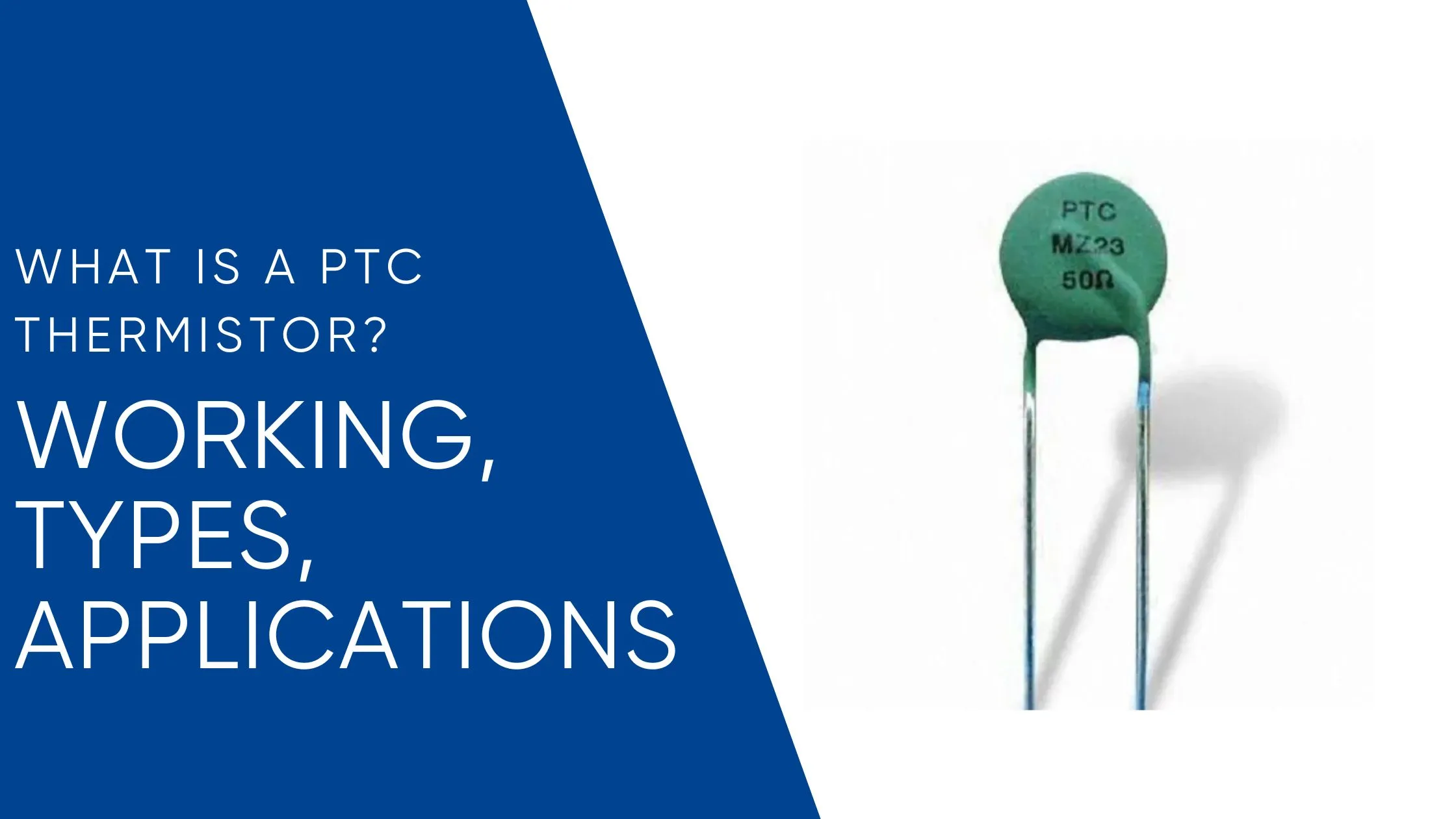
What is ptc thermistor? A ptc thermistor is a type of temperature-sensitive resistor used in electronic applications. Unlike other thermistors (like NTC, which do the exact opposite), it has a positive temperature coefficient, meaning its resistance increases as the temperature rises. This property makes it incredibly valuable for tasks like temperature sensing, overcurrent protection, and self-resetting fuses.
They are usually made from ceramic or polymer materials and are available in various sizes and temperature ranges to suit different applications. They provide a self-regulating solution for controlling temperature and limiting current flow in circuits without needing a whole computer brain to tell them what to do.
How Does a Positive Temperature Coefficient Thermistor Work?
The ptc-thermistor is basically a resistor that changes its mood with temperature. When it’s cool, it’s all chill and lets the current flow easily. But as soon as things start heating up, it resists! Its resistance shoots up with the rise in temperature.
You can think of it like this: the hotter it gets, the more stubborn it becomes. And that’s what is ptc behavior in a nutshell. The resistance and temperature move in the same direction.
Most ptc sensors are made using materials like barium titanate. It reacts really sharply to heat. Once it crosses a certain temperature (what we call the “Curie point”), the resistance doesn’t just increase a little, it spikes suddenly. That’s what makes it so useful in safety circuits, heaters, and even motor protection.
So yeah, in short: as the temperature increases, the resistance increases and that’s exactly how a positive temperature coefficient thermistor does its job.
Types of PTC Thermistors & Their Characteristics
Now, not all ptc thermistors are the same. Depending on how they’re made and what they’re used for, there are mainly three types you’ll come across. Let’s break them down.
1. Silistor PTC Thermistor: Working & Applications
This one’s made from silicon, and honestly, it’s quite the dependable type. It has a linear behavior, meaning that as the temperature goes up, resistance increases smoothly. It’s often used for temperature sensing and compensation because it gives stable and predictable readings. But once it hits around 150°C, it flips its behavior and starts acting like an NTC thermistor, which can get messy if you aren't expecting it!
2. Ceramic Switching PTC Thermistor: Working & Uses
It behaves quite differently when it starts heating; resistance first drops a little bit, and then suddenly shoots up sky-high once a certain temperature is reached. That’s why it’s called a “switching” ptc resistor, because it kind of switches behavior after hitting its critical Curie point. These are commonly used in sensors, heaters, and protection circuits where a quick response is needed.
3. Polymer PTC (PPTC) Thermistor: Working & Applications
Also known as the resettable fuse, this one’s a lifesaver in many circuits. When things go wrong, say, there’s an overcurrent or short- it immediately jumps into action by increasing resistance and cutting off the flow. Once things cool down or return to normal, it resets itself. No replacement needed. Handy, right?
What are the Major Applications of PTC Thermistors?
Alright, so let’s talk about where these PTCs actually show up in real life. You’d be surprised- they’re quietly working behind the scenes in so many everyday devices we use.
- Overcurrent Protection: They act as self-resetting fuses in circuits. When the current exceeds a safe threshold, the thermistor’s resistance rises rapidly, limiting the current flow and protecting the circuit from frying. Once the fault clears, it resets itself.
- Temperature Sensing: PTC thermistors serve as sensors that measure temperature in various devices and systems. They increase their resistance with temperature, enabling precise temperature monitoring and control.
- Temperature Compensation: Used in circuits requiring temperature compensation. They help stabilize the performance of components by counteracting the effects of temperature changes, ensuring consistent and reliable operation.
- Motor Starters: Used in motor starters to provide inrush current protection. They limit the initial high current drawn by the motor during startup, preventing damage to the motor windings and associated components.
- Liquid Level Sensing: They alter their resistance when exposed to different liquid levels (because liquids cool them down faster than air), enabling accurate detection and control of liquid levels.
- Heating Elements: They can act as heating elements in devices such as hair dryers, heaters, and soldering irons. They exhibit a high resistance at low temperatures, generating heat safely as current flows through them without overheating.
PTC vs NTC Thermistor: Key Differences Compared
It's super easy to mix these two up when you are sourcing components, so here is a cheat sheet table to keep them straight.
| Feature | PTC Thermistor | NTC Thermistor |
| Temperature vs Resistance | Resistance increases with heat | Resistance decreases with heat |
| Primary Material | Ceramic (Barium Titanate) or Polymer | Metal Oxides (Manganese, Nickel) |
| Best Used For | Self-resetting fuses, heaters, motor protection | Precision temperature logging, air probes |
| Behavior at Curie Point | Sudden dramatic spike in resistance | Smooth, gradual exponential curve |
To Know more Check: Difference Between NTC and PTC Thermistor
Advantages and Disadvantages of PTC Thermistors
Okay, so like everything else in electronics, even these smart little ptc sensors come with their own set of pros and cons. Let’s just talk through them one by one.
Advantages —
- They’re super reliable and don’t need much maintenance. Once fixed, they quietly do their job for years.
- Very compact in size, which means they can fit easily even in tight spaces. Perfect for modern electronics where space is everything.
- They react really fast to temperature changes, so if something starts heating up, they’ll act before things get risky.
- Plus, they’re pretty affordable compared to other types of temperature sensors.
- And my favorite part, once calibrated properly, you usually don’t need to keep checking or adjusting them. They’re like the “set it and forget it” kind of devices.
Disadvantages —
- They can’t handle very high temperatures. Their operating range is kind of limited, so not ideal for extreme furnace conditions.
- Their output isn’t linear (except for silistors), meaning at high temperatures, readings can get a bit unpredictable.
- They’re also a little delicate, so not something you can handle roughly during assembly.
- Oh, and if you’re working with strong power lines, they need proper shielding, otherwise, things might get a little messy.
Why Are PTC Thermistors Important in Electronics?
So yeah, that’s pretty much what a ptc thermistor is, small, smart, and super dependable when it comes to keeping temperature in check. I know, we usually don’t think much about these little components, but they’re literally the silent protectors inside so many devices. From our cars to our washing machines, even industrial systems.
The best part is how they automatically know when to step in. Once the temperature goes up, they raise resistance, slow down current, and save the circuit. Simple logic, but genius design, right?
And that’s exactly why using good-quality ptc thermistors is so important. They don’t just prevent overheating, they extend the life of your devices. At the end of the day, a tiny sensor like this can make a big difference in safety, efficiency, and performance.