Temperature Gauge on Your Car Not Working? Here's Why & How to Fix it?
Temperature Gauge on Your Car Not Working? Here's Why & How to Fix it?
Your car's temperature gauge is one of the most important instruments on the dashboard, yet it's often ignored until something goes wrong. If your temperature gauge is stuck on cold, fluctuating unexpectedly, or not working at all, it could be warning you about anything from a faulty coolant temperature sensor to thermostat or electrical issues. Ignoring the problem can lead to engine overheating and expensive repairs.
In this guide, we'll explain why your car temperature gauge isn't working, the most common causes, how to diagnose the issue, estimated repair costs, and what you can do to prevent serious engine damage.
What Does a Car Temperature Gauge Do?
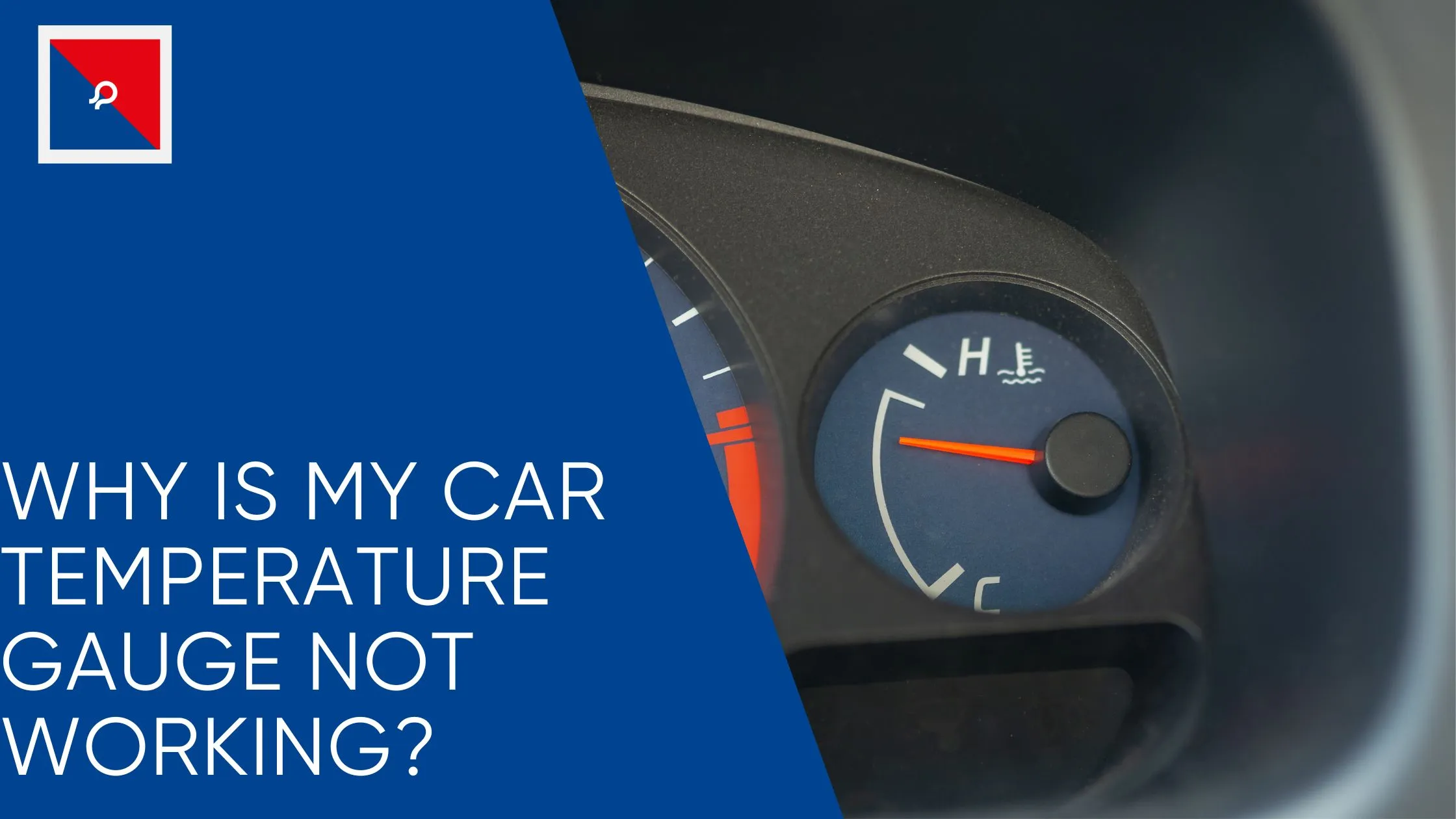
Before we start playing mechanic, let’s get clear on what we're looking at. The car temperature gauge displays the current temperature of your engine's coolant.
Most cars don't give you exact numbers l. Instead, they just give you a simple dial with "C" (Cold) on one end, "H" (Hot) on the other, and a nice, safe middle zone. Under normal driving conditions, that needle should sit right in the center. If it drops to the bottom or shoots straight to the red zone, you’ve got a problem.
Top 4 Reasons Your Car Temperature Gauge Isn't Working
If your dial is acting dead or lying to you, the fault usually lies in one of these four areas.
1. Faulty Coolant Temperature Sensor (CTS)
This is the number one suspect. The coolant temperature sensor is a small plug that sits inside the engine block or near the thermostat housing, right in the path of the flowing coolant. It reads the heat and sends an electrical signal up to your dashboard.
Because it lives in a harsh environment of constant heat cycles and chemical coolant, it eventually just gives up. If the sensor dies or gets coated in nasty sludge, the dashboard gets zero data. Thus, a dead needle.
2. Stuck Open or Faulty Thermostat
Your car's thermostat is like a little gatekeeper valve. When the engine is cold, it stays shut to let the engine warm up. When it gets hot, it opens to let coolant flow to the radiator.
If the thermostat gets stuck open, the coolant just flows constantly. The engine never gets a chance to reach its proper operating temperature, especially in winter. So, if your gauge is reading incredibly low but your cabin heater is also blowing lukewarm air, your thermostat is likely the culprit, not the gauge itself.
3. Air Trapped in the Cooling System
Did you recently flush your radiator or top up your coolant? If so, an air pocket might be trapped inside the engine block.
If a big bubble of air gets stuck right around the tip of the temperature sensor, the sensor ends up reading the temperature of the air pocket instead of the actual liquid coolant. This causes the gauge to read way too low, or spike wildly up and down out of nowhere.
4. Faulty Dashboard Instrument Cluster or Wiring
Sometimes, the sensor under the hood is working perfectly, but the actual physical needle on your dashboard is broken, or the wiring behind the dash has shorted out. Modern dashboards are essentially small computers, and a bad solder joint or a blown cluster fuse can instantly kill the dial.
Car Temperature Gauge Repair Costs: Parts & Labour Breakdown
Alright, let's talk numbers. If you need to fix temperature gauge car issues, how much is it going to set you back? Here is a rough breakdown of what parts and labor look like at a typical repair garage:
| The Problem Component | Average Part Cost | Average Labor Cost | Total Estimated Cost |
| Coolant Temp Sensor (CTS) | ₹600 – ₹1,800 | ₹500 – ₹1,200 | ₹1,100 – ₹3,000 |
| Engine Thermostat Replacement | ₹800 – ₹2,500 | ₹800 – ₹1,500 | ₹1,600 – ₹4,000 |
| Coolant System Burping/Bleeding | ₹0 (DIY) | ₹400 – ₹800 | ₹0 – ₹800 |
| Complete Dashboard Cluster Repair | ₹3,000 – ₹9,000 | ₹1,500 – ₹3,000 | ₹4,500 – ₹12,000 |
Why Automotive Manufacturers Trust JR Sensors
At JR Sensors, we know how vital accurate thermal management is for modern vehicles. We specialize in manufacturing high-precision, automotive-grade NTC thermistors and temperature sensing elements that deliver flawless, real-time data to vehicle control units. By utilizing rugged materials that resist thermal shock and cooling-system corrosion, our sensors help automotive manufacturers ensure that the driver's dashboard always tells the absolute truth—preventing catastrophic engine failures before they can start.