Types of Sensors in IoT: The Tiny Devices Powering a Smarter World
Types of Sensors in IoT: The Tiny Devices Powering a Smarter World
Ever asked yourself how your smart house recognises that you are home or how a fridge can detect that you are out of milk before you even open the refrigerator? Nope, not magic (although it can sure feel that way sometimes!). It is the interesting universe of the Internet of Things, or IoT, driven by some really smart small devices known as sensors.
Then, fasten your seat belts, get a virtual cup of coffee (or any other drink you prefer), as we are now going to take a deep breath and plunge into the discussion of those tiny titans that power the IoT.
What exactly is IoT, anyway? (And Why Should You Care?)
Now consider a world where everything, literally everything, including your coffee maker, a city bus, a factory machine, and even the collar that your pet is wearing, can be connected to the internet. Not merely connect, you understand, but also gather information, liaise with other things, and even make decisions without human assistance. That is the Internet of Things in a nutshell, my friend.
It is like providing lifeless things with a voice and a brain (a small, concentrated one, though). These things are installed with sensors, software, and other technologies, enabling them to transfer and receive information through a network. What is in it for you? As IoT is changing all that: the way we live, the way we work, the way cities work, even the way we grow food. It is simplifying our lives, industrialising our businesses and making our world a lot smarter. Also, it is quite neat to speak to your smart speaker and see (or rather hear) it respond.
The Purpose of Sensors: The Eyes and Ears of IoT
But, of course, sensors are the eyes, ears, nose, and even touch receptors of IoT, which allows bringing everything closer together. They are the data collectors of the front line, the unglamorous troops that make the actual world into the digital bits and bytes that computers can comprehend and operate upon.
What are their main intentions? To sense and transduce physical events and phenomena and to translate them into electrical signals. You can consider it in the following way: your eyes capture the light and transfer the information to your brain to create a picture. A computer has something like that done by a light sensor. IoT devices would be pointless without sensors, making them deaf, blind, and completely useless; in other words, attempting to walk around a dark room with your eyes shut.
These are the invisible elements that make real-time monitoring, automation, and decision-making in the IoT ecosystem possible. They are the raw data that enables a smart thermostat to turn the temperature up or down, a security camera to alert you to movement, or a fitness tracker to add up your steps. Basically, when an IoT device must be aware of something in its surroundings, a sensor is working hard.
Diving into the Menagerie: Various Types of Sensors in IoT
Alright, enough preamble! Let's meet the stars of the show, the different types of sensors. It's a surprisingly diverse bunch, each with its superpower.
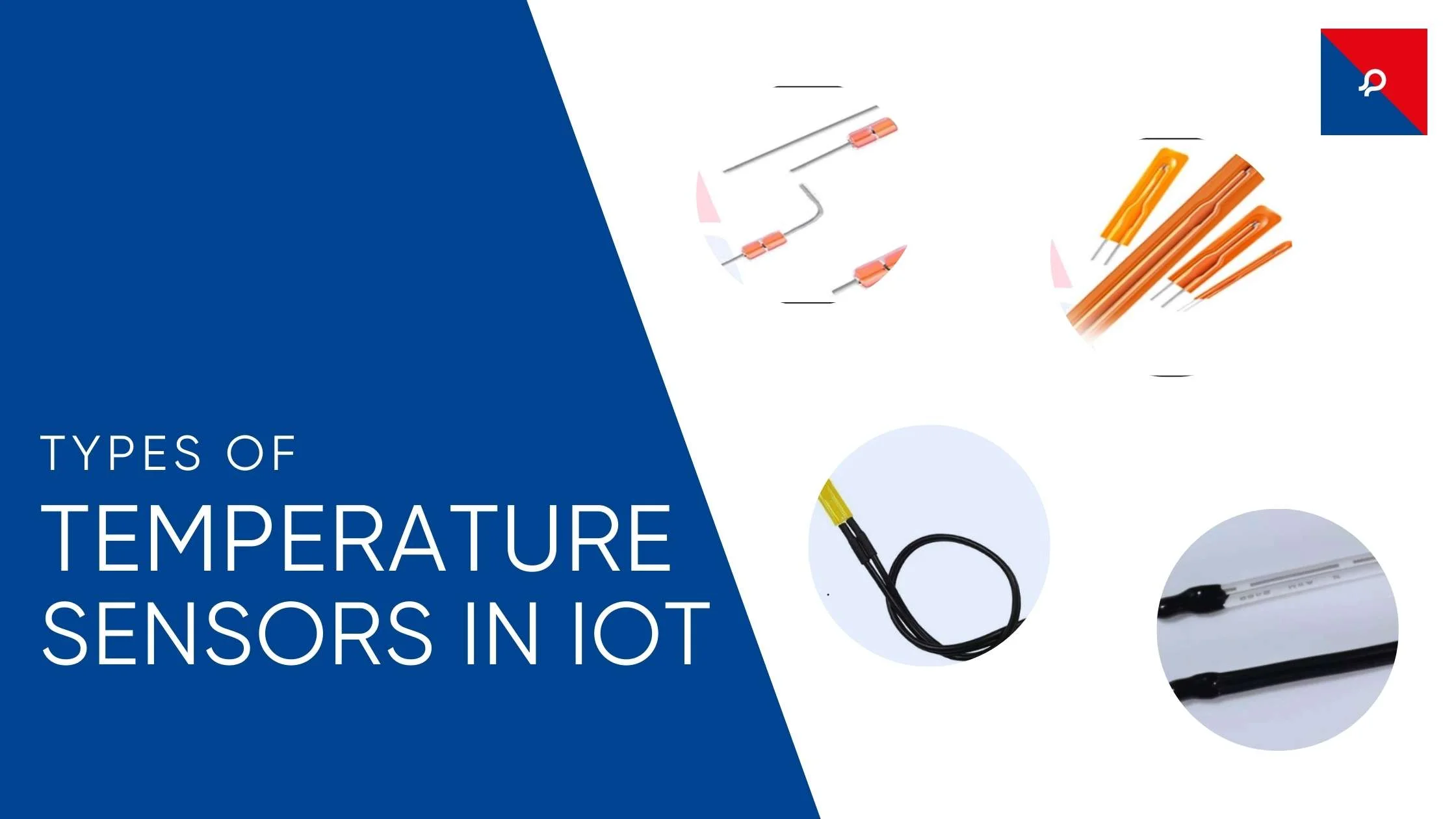
1. Temperature Sensors: The Thermometers of the Digital Age
- What they do: These are pretty straightforward. They measure heat or cold.
- How they work (simply): They often use thermistors, thermocouples, or RTDs that change resistance based on temperature.
- Where you'll find them: Smart thermostats (obviously!), industrial freezers, data centres (to prevent overheating), medical devices, and even in your smart ovens. They ensure your frozen pizza cooks just right or that your server doesn't melt.
2. Proximity Sensors: The "Are You There Yet?" Detectors
- What they do: Detect the presence or absence of an object without physical contact.
- How they work (simply): They can use light (photoelectric), sound (ultrasonic), or electromagnetic fields (inductive, capacitive).
- Where you'll find them: Your smartphone (turns off the screen when you hold it to your ear), automated doors, car parking sensors, assembly lines (counting products), and even in touchless hand sanitisers. They're the polite bouncers of the digital world.
3. Accelerometers: The Motion Detectives
- What they do: Measure acceleration, tilt, vibration, and even the force of gravity.
- How they work (simply): They often use tiny microscopic crystals that get stressed when accelerated, generating a voltage.
- Where you'll find them: Fitness trackers (counting steps!), smartphones (screen rotation, gaming), car airbags (detecting crashes), drones (stability control), and seismic activity monitoring. They're always asking, "Are you moving? How fast? In what direction?"
4. Gyroscopes: The Orientation Gurus
- What they do: Measure angular velocity and maintain orientation based on the principles of angular momentum. Think of them as the digital compass for rotation.
- How they work (simply): They often work alongside accelerometers using MEMS (Micro-Electro-Mechanical Systems) technology.
- Where you'll find them: VR headsets (knowing which way you're looking), drones (stabilising flight), smartphones (for precise gaming and navigation), and robotic systems. They're the ones making sure your virtual world doesn't turn upside down (unless you want it to!).
5. Light Sensors (Photoelectric Sensors): The Lightbulb Moment Detectors
- What they do: Measure the intensity of light or detect the presence of light.
- How they work (simply): They often use photodiodes or photoresistors whose electrical properties change with light exposure.
- Where you'll find them: Streetlights (turning on at dusk), automatic faucets, smartphone screens (adjusting brightness), security systems, and solar panels. They're saying, "Let there be light... or not!"
6. Pressure Sensors: The Squeeze Detectors
- What they do: Measure the pressure of gases or liquids.
- How they work (simply): Convert pressure into an electrical signal using diaphragms, strain gauges, or capacitive elements.
- Where you'll find them: Weather stations (barometric pressure), medical devices (blood pressure monitors), tire pressure monitoring systems, industrial processes (monitoring fluid levels), and even smart shoes. They're great at telling if something's feeling the squeeze.
7. Humidity Sensors: The Moisture Monitors
- What they do: Measure the amount of water vapour in the air.
- How they work (simply): They often use capacitive or resistive elements that change properties based on moisture absorption.
- Where you'll find them: HVAC systems, weather stations, agricultural settings (monitoring soil moisture), smart home environments (controlling dehumidifiers), and industrial drying processes. They're the ones who'll tell you if your hair is going to frizz today.
8. Gas Sensors: The Atmospheric Analysts
- What they do: Detect the presence and concentration of various gases, like carbon monoxide, methane, or oxygen.
- How they work (simply): Use chemical reactions or electrochemical changes to identify and quantify specific gases.
- Where you'll find them: Smart smoke detectors, industrial safety systems, air quality monitoring stations, and even in some smart kitchens to detect gas leaks. They're the vigilant guardians of breathable air.
9. Motion Sensors: The "Someone's Here!" Alarms
- What they do: Detect physical movement. Often a broader category that can include PIR (Passive Infrared) sensors.
- How they work (simply): PIR sensors detect infrared radiation (body heat) emitted by objects.
- Where you'll find them: Security alarms, automatic lighting systems, smart cameras, and automated doors. They're shouting, "Intruder alert!" or "Welcome, esteemed guest!"
10. Flow Sensors: The Liquid/Gas Speedometers
- What they do: Measure the rate of flow of a liquid or gas through a pipe or conduit.
- How they work (simply): They can use various principles like turbine rotation, ultrasonic waves, or differential pressure.
- Where you'll find them: Smart water meters, industrial process control, medical devices (IV drips), and fuel consumption monitoring. They're counting every drop (or puff).
The Sensor Symphony: Working Together for a Smarter World
The real magic of IoT is not only the personal capabilities of these sensors but their combination. A smart farming system could include temperature, humidity, and soil moisture sensors to ensure better irrigation. A self-driving vehicle integrates lidar, radar, ultrasonic and image sensors to sense the environment. Likely, your smartwatch contains an accelerometer, gyroscope, heart rate sensor, and others, which work together.
It is due to these small data suppliers that we are living in a world that is more interconnected, receptive and smart. One data point at a time, they are making science fiction turn into everyday reality. And who knows what kind of new sensors will be discovered next to make our life even smarter (and perhaps even funnier)?
JR Sensors is a firm that focuses on offering comprehensive IoT solutions and training. Their strength lies in the availability of many industrial-grade sensors and modules, thus making the implementation of IoT affordable. In addition to products, JR Sensors is also working in the direction of skill development by enabling students and professionals with applied knowledge in the field of IoT and automation technologies.