Why Is Temperature Monitoring Important in Electric Vehicle Charging Inlets?
Why Is Temperature Monitoring Important in Electric Vehicle Charging Inlets?
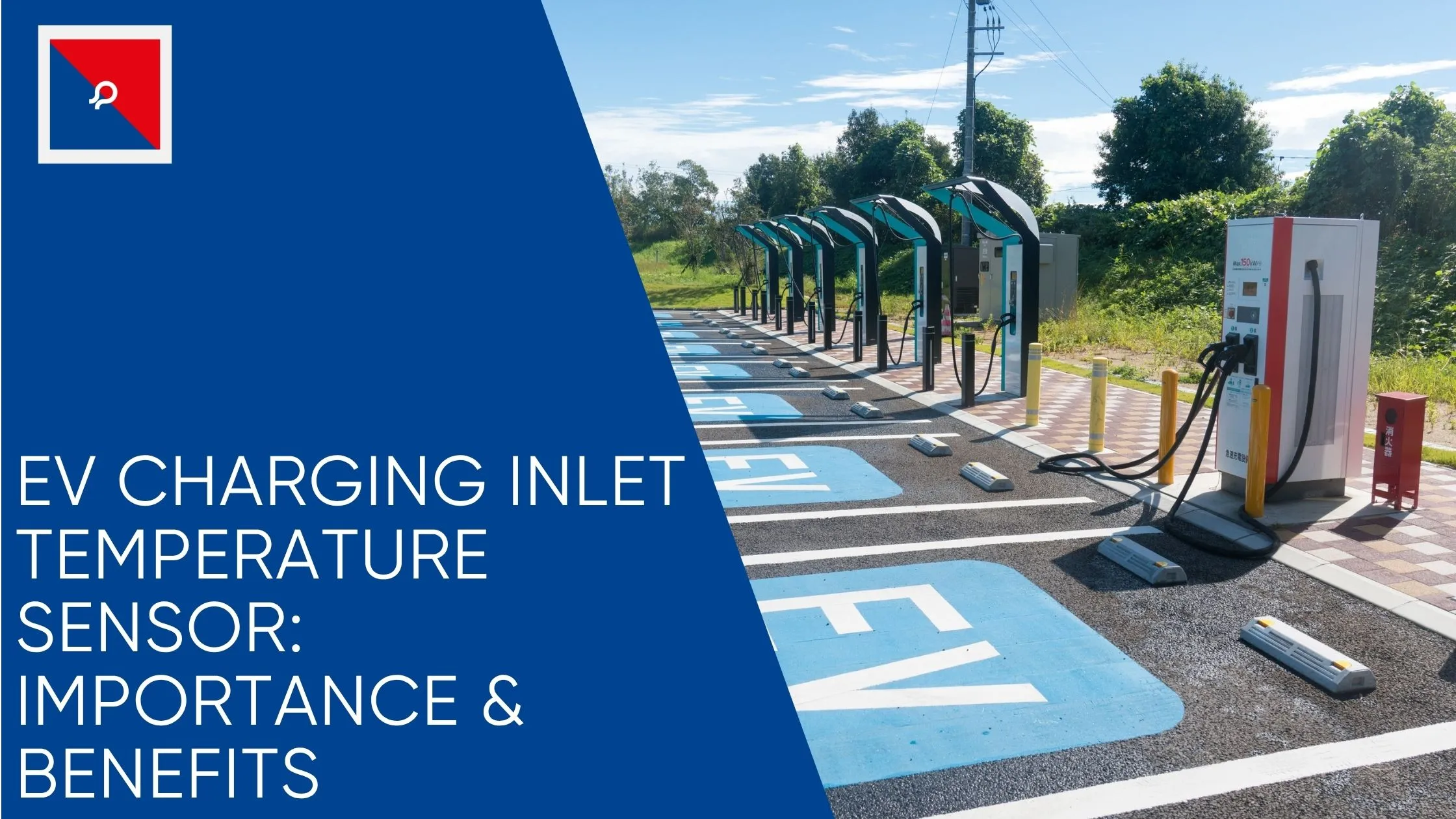
An EV charging inlet temperature sensor monitors heat around the electrical contacts of an electric vehicle's charging inlet and helps detect abnormal temperature increases during charging. High charging currents, increased contact resistance, worn contacts, and elevated ambient temperatures can contribute to excessive heat around the connector.
By providing temperature data to the vehicle's monitoring system, these sensors can support protective actions such as reducing charging current or stopping charging when predefined temperature limits are reached.
In this guide, we'll explore why EV charging inlet temperature monitoring is important, what causes connector overheating, how temperature sensors work, and what engineers should consider when selecting a suitable sensor.
Why Is Temperature Monitoring Important in EV Charging Inlets?
During EV charging, electrical current passes through the connector contacts and vehicle inlet. Some heat is generated during this process, particularly at high currents.
However, excessive heat can indicate a problem. Loose connections, contact wear, contamination, or increased electrical resistance can cause localised temperature rises.
EV charging inlet temperature monitoring helps track these changes while the vehicle is charging. The temperature data can support protective actions, such as reducing charging current or stopping charging when required by the system.
This helps protect charging components and supports reliable operation.
What Are the Common Causes of EV Charging Port Overheating?
EV charging port overheating can occur for several reasons. Identifying these factors helps engineers select suitable sensors and design effective temperature protection.
Common causes include:
- High charging current: Fast charging can generate more heat at electrical contacts.
- Increased contact resistance: Worn, damaged, or poorly connected contacts can produce additional heat.
- Repeated charging cycles: Regular use can affect connector contacts over time.
- High ambient temperatures: Hot surroundings can make it harder for charging components to dissipate heat.
- Poor contact conditions: Contamination or mechanical wear may affect electrical contact quality.
Temperature monitoring helps detect abnormal heating, but it should work alongside proper connector design, electrical protection, and regular maintenance.
How Does an EV Charging Inlet Temperature Sensor Work?
A EV charging inlet temperature sensor measures temperature near critical electrical contacts and sends a corresponding signal to the vehicle's control system.
Depending on the design, the system can use this information to manage charging current or trigger protective measures when temperatures exceed defined limits.
For example, an NTC thermistor changes its electrical resistance as temperature changes. The vehicle's electronics interpret this change to estimate temperature and determine whether action is needed.
The exact response depends on the charging system design, sensor specifications, and programmed protection limits.
What to Look for in an EV Charging Cable Temperature Sensor
An EV charging cable temperature sensor and an inlet temperature sensor serve related but different purposes. A cable sensor monitors selected points in the cable or plug, while an inlet sensor measures temperature near the vehicle's charging contacts.
When selecting a sensor for an EV charging application, consider these factors:
- Temperature range: The sensor should suit the expected operating conditions.
- Measurement accuracy: Reliable readings help the control system respond appropriately.
- Response time: A suitable response time helps detect changing thermal conditions.
- Compact design: The sensor must fit the available space around charging contacts.
- Electrical insulation: Insulation requirements should match the application's electrical design.
- Integration: The sensor output must be compatible with the vehicle's monitoring and control electronics.
These factors help engineers choose a sensor that meets the requirements of the specific charging inlet or cable assembly.
How Does Temperature Monitoring Improve EV Charging Safety and Reliability?
EV charging safety depends on several factors, including connector design, electrical protection, temperature control, and correct installation.
Continuous temperature measurements provide visibility into conditions that may not be apparent during a routine inspection. When the monitoring system detects an abnormal reading, the vehicle or charger can respond according to its protection strategy.
This can help:
- Reduce the risk associated with excessive connector heating.
- Protect charging contacts and surrounding components.
- Support controlled charging during demanding operating conditions.
- Identify thermal issues that may require further inspection.
Temperature monitoring is not a replacement for other safety measures. It is one important part of a properly designed charging system.
How to Choose the Right EV Charging Inlet Temperature Sensor?
Selecting a temperature sensor requires more than checking its temperature range. EV manufacturers and connector developers should also consider accuracy, response time, mechanical fit, electrical requirements, and compatibility with the monitoring electronics.
The right choice depends on the charging inlet design, current rating, operating environment, and intended protection strategy.
JR Sensors develops temperature sensing solutions for automotive and industrial applications. If you are developing EV charging inlets or connector assemblies, JR Sensors can help you explore suitable sensor options based on your application's temperature range, integration requirements, and performance specifications.
Looking for a Temperature Sensor for Your EV Charging Inlet?
Reliable temperature monitoring is essential for managing heat around EV charging contacts and supporting safe charging operations. JR Sensors develops temperature-sensing solutions for automotive applications, including EV charging-related requirements.
Contact JR Sensors to discuss your charging inlet temperature sensing requirements and explore a suitable solution based on your application's specifications.