Checking your car’s engine coolant level is a simple maintenance task that helps you identify low coolant levels before they contribute to engine overheating. To check it, park your vehicle on a level surface, switch off the engine, and allow it to cool completely. Locate the coolant reservoir and check whether the fluid sits between the MIN and MAX markings.
If the level is low, use the coolant type and specification recommended in your vehicle’s owner’s manual. Regular coolant checks can help identify potential leaks and cooling system problems early. In this guide, we’ll explain how to check engine coolant level, understand different coolant types, recognise warning signs, and know when your car needs professional attention.
What Does Engine Coolant Do? Is It the Same as Antifreeze?
Quick quick answer: Yes, coolant and antifreeze are basically the same thing in normal driving talk.
Technically, antifreeze is the concentrated chemical (ethylene glycol or propylene glycol) you buy in a jug. When you mix it 50/50 with distilled water, it becomes engine coolant. People may also ask how to check water in car systems, and while older cars literally used plain tap water, modern engines will rust out fast if you only use water.
The coolant's main job? It circulates through your engine block, absorbs insane amounts of heat, and carries it off to the radiator to cool down. It also prevents the water from freezing solid during winter and stops nasty scale or rust from eating your metal engine parts from the inside out.
What Should You Know Before Checking Engine Coolant?
Note: NEVER, EVER open your car's coolant cap while the engine is hot.
Seriously. When an engine runs, that cooling system gets pressurized like a giant shake-up soda bottle, and the liquid inside gets way past boiling temp. If you twist that cap off right after driving, scalding hot steam and pressurized chemical liquid will shoot straight up.
Park on a flat surface, turn off the ignition, and let the car sit for at least 30 to 45 minutes to completely cool down before you even touch that cap.
How to Check Engine Coolant Level in Car (Step-by-Step)
Checking your coolant level takes literally 120 seconds once the engine is cool. Here’s how you do a proper check coolant level routine:
1. Find the Plastic Expansion Tank:
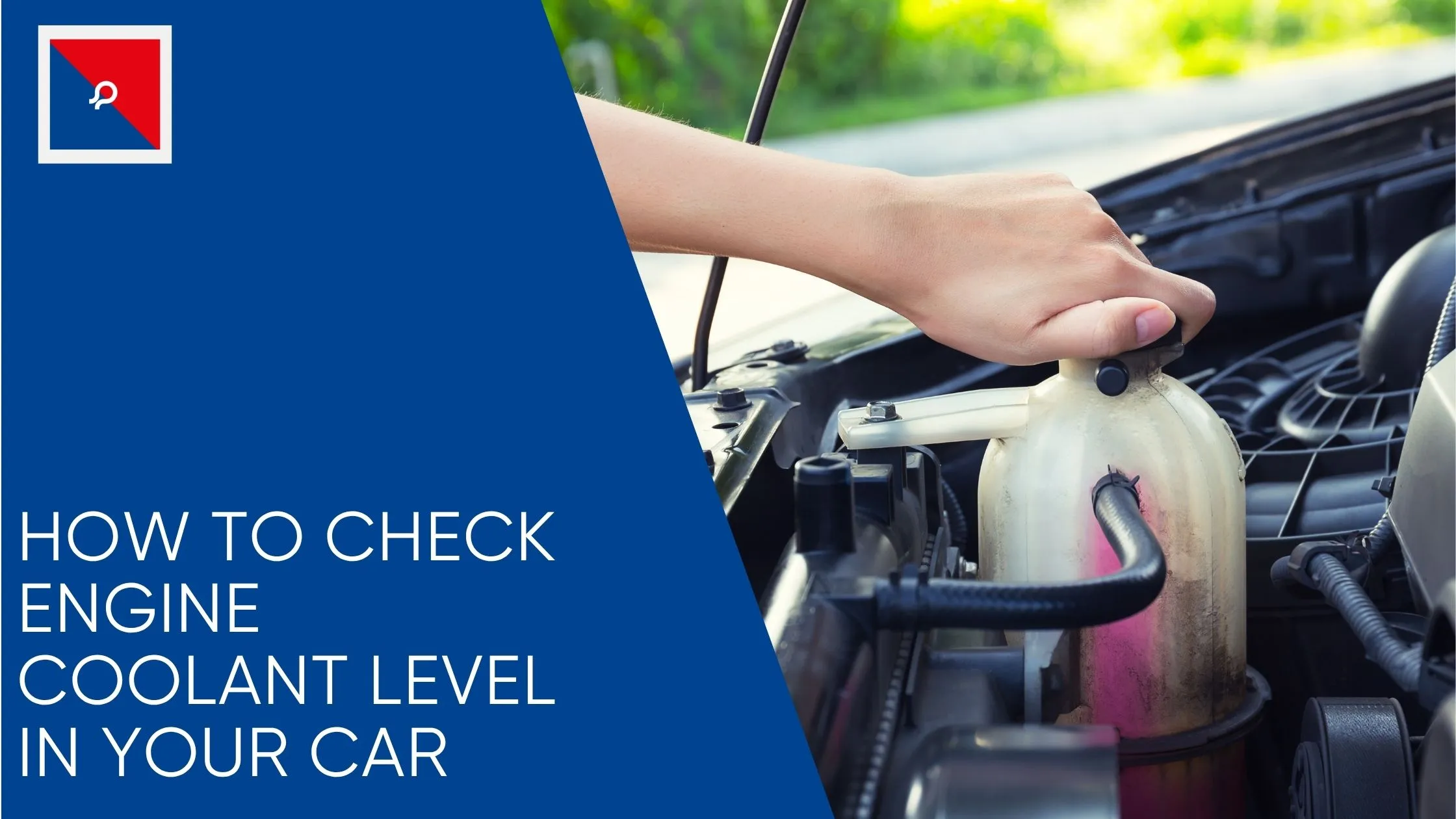
Pop your hood and look for a see-through (translucent) white or yellowish plastic tank. It's usually near the front or side of the engine bay, connected by a thick hose to the radiator. The cap usually has a warning symbol (like a hand getting burned or a radiator symbol) and might say "Coolant" or "Antifreeze".
2. Read the Min/Max Markings:
You don't even have to open the cap to check coolant! Just look at the side of the plastic reservoir tank. You'll see two etched lines marked MIN / LOW (or ADD) and MAX / FULL.
3. Evaluate the Fluid Level:
Where is the liquid sitting?
- Between MIN and MAX: Perfect. Put the hood down, you're good to go.
- Below MIN: You need to top it up soon.
- Bone Dry: You might have a leak somewhere under the engine bay.
4. Inspect the Color and Texture:
Take a quick look at the fluid itself. Fresh coolant is usually bright red, neon green, blue, or pinkish yellow depending on your car brand. If it looks dark brown, rusty, or sludgy like chocolate milk, that's a red flag, it means oil is leaking into your coolant or the fluid has broken down completely.
How to Check Antifreeze in Car Options & Fluid Types
If your coolant check level shows it's running low, you can top it up yourself, but don't just pour whatever liquid you find under your garage sink!
| Coolant Type | Color | Typical Usage | Can You Mix Them? |
| IAT (Inorganic Additive Tech) | Bright Green | Older cars (pre-2000s) | No — will cause gunk build-up |
| OAT (Organic Acid Tech) | Orange, Red, Pink | General Motors, European, Asian models | No — ruins corrosion inhibitors |
| HOAT (Hybrid OAT) | Yellow, Turquoise | Ford, Chrysler, European cars | No — stick to OEM specs |
| 50/50 Pre-Diluted | Various | Any modern top-up | Yes, if color/type matches |
Rule of thumb: Check your car owner's manual to find the exact specification. Mixing two totally different coolant chemistries can cause a weird chemical reaction that turns your fluid into thick jelly, clogging your entire cooling system!
What Are the Common Signs of an Engine Coolant Leak?
If you check engine coolant today, top it off, and then notice two days later the tank is empty again... you've got a leak. Coolant operates in a sealed loop, so it shouldn't just "disappear".
Watch out for these quick warning signs:
- Sweet syrupy smell: If you smell maple syrup outside or inside your car after parking, coolant is leaking onto hot engine parts and burning off.
- Cold heater vents: If your dashboard vents blow ice-cold air even when you set the climate dial to hot, your coolant level is probably too low to reach the heater core!
- Puddles under the front: Bright green, pink, or orange liquid puddling under your front bumper or engine bay.
- White crust on hoses: Look along the rubber hoses for dried white or colored crusty staining, that's a sign of a slow leak around a loose hose clamp.
If you suspect a leak, get it checked by a mechanic before an innocent leak turns into a overheated, warped engine block.
To Know more about the Symptoms of Coolant Temperature Sensor Check: Coolant Temperature Sensor Symptoms
A Quick JR Sensors Note
Checking your car’s engine coolant level regularly is an important part of routine vehicle maintenance. It helps identify low coolant levels, potential leaks, and other cooling system problems before they lead to more serious engine damage.
Always check the coolant when the engine is completely cool, follow the MIN and MAX markings on the reservoir, and use the coolant specification recommended by your vehicle manufacturer. If the level keeps dropping or you notice signs of overheating, have the cooling system inspected by a qualified mechanic.
Along with regular coolant checks, accurate engine temperature monitoring plays an important role in maintaining reliable vehicle operation. Coolant temperature sensors help provide the data needed by the vehicle’s control system to monitor engine thermal conditions.
Looking for Reliable Engine Coolant Temperature Sensors?
Accurate temperature measurement is essential for monitoring engine cooling systems and supporting reliable automotive performance. JR Sensors develops temperature-sensing solutions for automotive applications, including engine and coolant temperature sensors.
Contact JR Sensors to discuss your application’s temperature range, sensor requirements, and integration specifications.