I remember running cables for a walk-in freezer setup a couple of years back. It was an absolute nightmare. We spent hours drilling through thick insulation, trying to seal everything properly, and routing meters of wire just to get a single data feed to the dashboard. Halfway through, I remember thinking, there has got to be a cleaner way to do this.
Thankfully, there is. Wireless temperature sensors have completely shifted how we track data in 2026. Instead of wrestling with conduits and messy drilling, you can basically slap a sensor onto a wall or inside a vaccine fridge, flip it on, and walk away.
But how do these things actually talk to each other without losing data? And more importantly, are wireless temperature sensors accurate for climate control? Let's dive deep into how a modern wireless temperature monitoring system functions, where it fits into the broader internet of things (IoT) landscape, and what you need to look out for when setting one up.
How Wireless Temperature Systems Work?
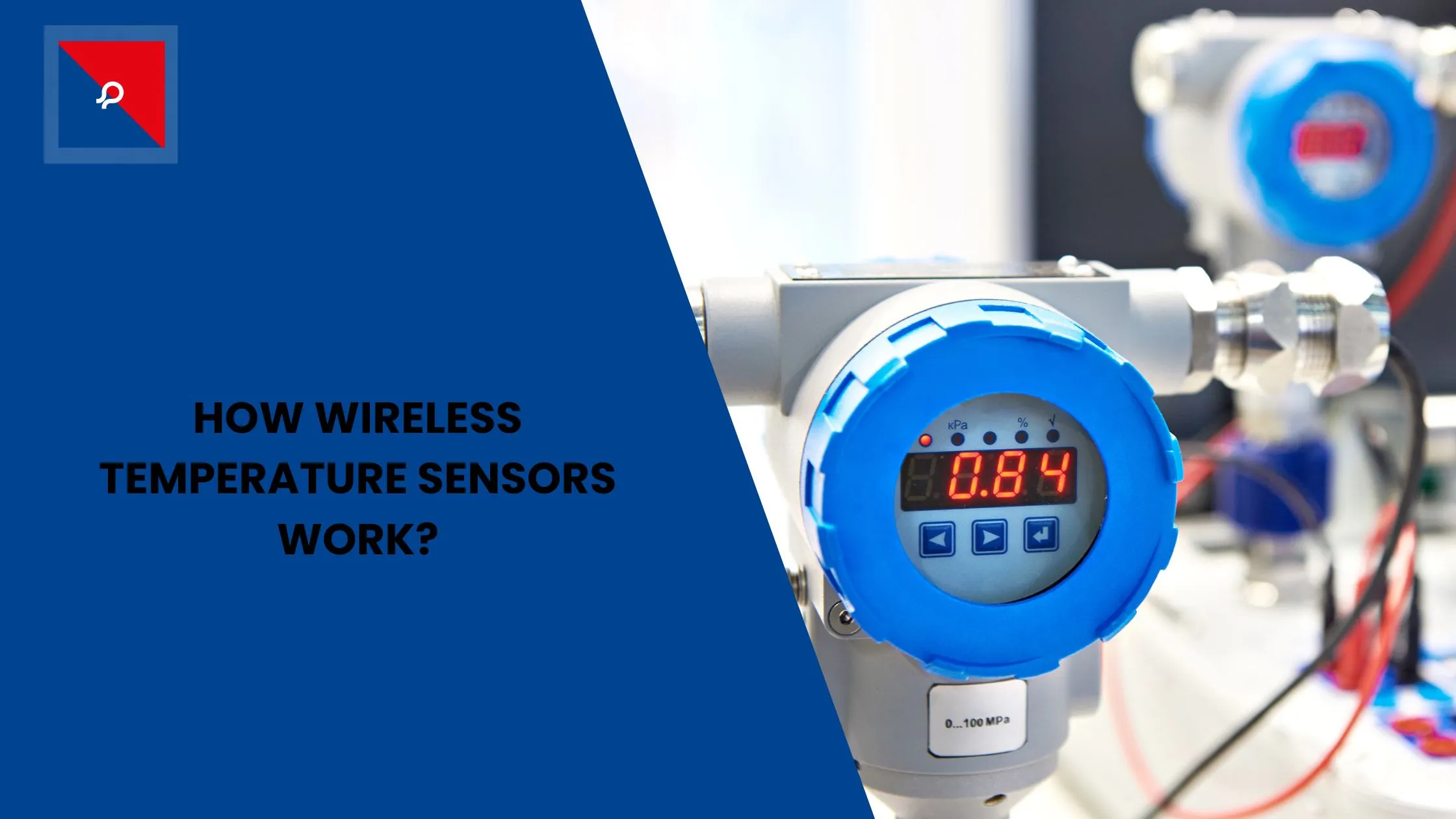
A wireless setup doesn't just eliminate cords; it changes the entire data pipeline. In a traditional wired environment, the sensor is just a passive probe. In a wireless setup, the probe is married to a tiny radio communicator.
The ecosystem relies on three core blocks working together:
- The Sensor Node (The Sniffer): This houses the actual probe and acts as a temperature sensor in iot networks. It checks the ambient heat at set intervals (say, every 5 minutes).
- The Wireless Temperature Transmitter (The Mouth): Integrated directly into the sensor node, this transmitter converts the raw heat reading into a radio frequency signal (like LoRaWAN, Wi-Fi, or Cellular) and beams it through the air.
- The Gateway (The Ear): A central receiver hub that listens for transmissions from the entire wireless temperature sensor network. It collects the data packets and pushes them up to a cloud dashboard.
Because these devices use highly optimized, low-power radio frequencies, they can run on simple internal batteries for years before needing a swap.
Accuracy Check: Can You Trust Them for Climate Control?
Whenever I talk to engineers about moving away from wires, the very first question they ask is: Are wireless temperature sensors accurate for climate control?
The short answer is: Yes, absolutely. The fact that the data travels through the air doesn't make the reading itself any less precise. The physical element doing the sensing inside a premium wireless temperature monitoring node is still a highly accurate RTD or thermistor chip.
Where people run into trouble isn't the accuracy of the chip, it's signal interference. If you buy cheap hardware and try to broadcast through three concrete walls or deep inside a metal shipping container, your gateway is going to drop packets. To fix this, industrial systems use advanced features like automated data-logging (so the sensor saves readings internally if it loses connection) and certified calibrations, like NIST traceable certifications, ensuring total regulatory compliance.
Top Applications of Wireless Temperature Sensor
Because they are so easy to deploy, the application of wireless temperature sensor network setups expands across a massive list of industries. Here are the places where cutting the cord makes the most sense:
| Industry / Asset | Key Challenge | Why Wireless Solves It |
| Cold Chain & Vaccine Storage | Even a 2-degree variance can ruin a whole batch of medicine. | 24/7 automated tracking with instant SMS alerts if a fridge door gets left cracked open. |
| Server Rooms & Data Centers | Hot spots can develop inside specific server racks silently. | You can deploy a dense wireless temperature sensor network across hundreds of racks without running a single new cable. |
| Pharma & Food Production | Strict regulatory audits require continuous data logs. | Sensors automatically log data to the cloud, eliminating manual clipboard checks. |
| Greenhouses & Agriculture | High humidity and sprawling acreage kill wired setups. | Long-range wireless nodes handle outdoor zones easily while keeping the electronics sealed away. |
The Rise of IoT Infrastructure in India
If you are looking to deploy a wireless temperature monitoring system india has recently become a fascinating market. With the rapid expansion of cold chain logistics for online grocery delivery and hyper-local pharma storage across Tier-1 and Tier-2 cities, businesses are realizing they can't rely on manual labor to watch thermometers anymore.
The local environmental conditions here add a layer of complexity. High ambient dust and intense seasonal humidity mean that a generic temperature sensor in iot settings won't cut it. You need ruggedized, IP-rated outer enclosures paired with high-quality internal components to ensure long-term stability.
What to Look for When Buying a Wireless System
If you are currently evaluating hardware options for your organization, skip the basic consumer-grade stuff and ensure your system checks these boxes:
- Local Data Storage: The node must have built-in memory buffer. If the Wi-Fi or local gateway drops for an hour, the sensor should store the data locally and upload it automatically once reconnected.
- Bank-Grade Security: Hackers love using insecure IoT devices as backdoors into corporate networks. Ensure your wireless temperature transmitter endpoints utilize high-level authentication and encrypted data transfers.
- Long Battery Life: Look for hardware that balances transmission frequency with power savings. A good industrial node should comfortably last 2 to 5 years on a standard set of batteries.
- Flexible Alerts: Ensure the accompanying cloud software can send multi-channel alerts (SMS, emails, and phone calls) so your team can step in immediately before an excursion event turns into an expensive loss.
Total Visibility Without the Mess
At the end of the day, moving to a modern wireless temperature monitoring system isn't just about saving your walls from ugly conduits. It’s about building a robust, automated safety net for your most critical assets. When you can monitor everything from a central mobile app 24/7, you stop reacting to temperature disasters and start preventing them entirely.