Ever wondered how a few lines of code suddenly start talking to the real world? That’s where sensors quietly steal the show. For DIY makers, understanding the types of sensors is like learning the alphabet of electronics. From sensor IoT projects to different types of sensors used in smart homes, cars, and even sensors in industrial automation, these basics power everything, from weekend hacks to IoT sensors and devices you see in smart factories today.
Why Sensors Matter So Much for DIY Makers (and Not Just Big Industries)
Every DIY project feels alive only because of sensors. Without them, your code is just… code. Sensors are what let your Arduino, ESP32, or Raspberry Pi see light, feel heat, sense motion, and react to the world. That’s why understanding the different types of sensors early on makes life a lot easier for makers.
What’s interesting is, the same sensor IoT concepts you use in a home automation project are also used by sensors manufacturing companies building systems for smart factory sensors, sensors in industrial automation, and even types of sensors on cars. The scale changes but the logic stays surprisingly similar.
The 10 Must-Know Sensors Every DIY Electronics Maker Should Master
If you’re just starting out or even if you’ve built a few projects already, these are the bread-and-butter types of sensors you’ll keep coming back to. They’re affordable, easy to find, well-supported online.
1. DHT11 / DHT22 – Temperature & Humidity
This is usually everyone’s first sensor (and for good reason). It measures temperature and humidity and sends the data digitally-clean and simple.
Best for: Weather stations, smart rooms, beginner sensor for IoT projects.
Pro tip: DHT22 is more accurate and worth the upgrade.
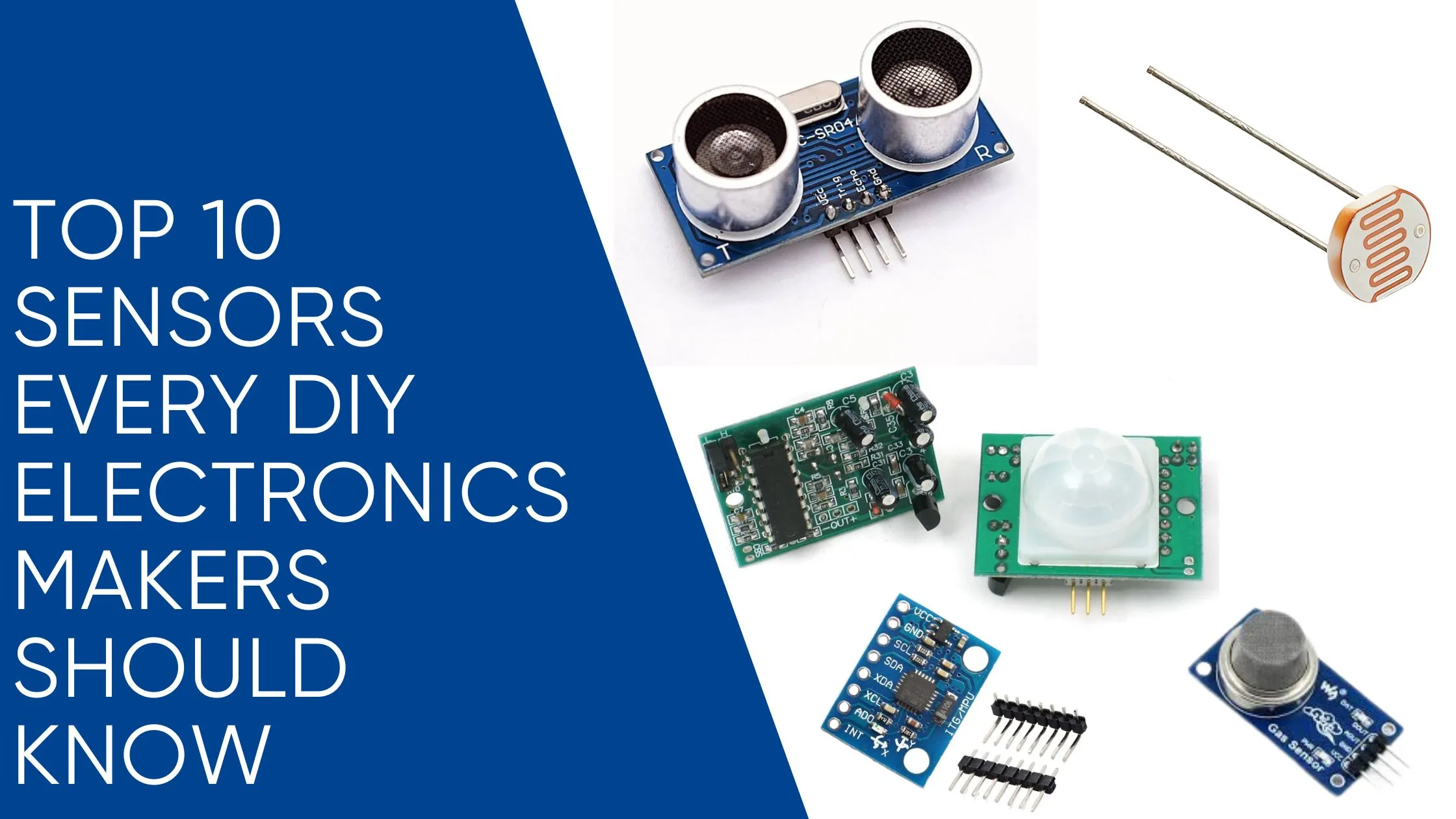
2. HC-SR04 – Ultrasonic Distance Sensor
This one measures distance by sending sound waves and listening for the echo.
Best for: Obstacle-avoiding robots, water-level monitoring, smart parking ideas.
3. PIR Sensor – Motion Detection
PIR sensors detect heat movement, not actual motion, which is why they’re so reliable.
Best for: Motion alarms, automatic lights, energy-saving systems.
You’ll see similar logic used in types of sensors on cars for safety features.
4. LDR / Photoresistor – Light Sensor
Simple, analog, and extremely beginner-friendly. Resistance changes with light.
Best for: Automatic night lights, solar tracking, light-based triggers.
This is one of the most basic different types of sensors, but still super useful.
5. MPU-6050 – Accelerometer & Gyroscope
This tiny module can sense tilt, movement, and rotationall in one.
Best for: Drones, gesture control, self-balancing robots.
You’ll find similar motion sensing concepts in sensors in industrial automation.
6. MQ Series – Gas & Smoke Sensors
These sensors detect gases like LPG, smoke, and air pollutants.
Best for: Gas leak alerts, air-quality monitors, safety projects.
Widely used even by sensors manufacturing companies in safety systems.
7. Soil Moisture Sensor
Measures how wet the soil is, your plants finally get a voice.
Best for: Smart irrigation, plant monitoring systems.
Go for capacitive versions, they last longer.
8. BMP280 / BME280 – Pressure Sensor
Measures atmospheric pressure, temperature, and sometimes humidity.
Best for: Altitude tracking, weather prediction, drone projects.
A great example of types of sensors in IoT doing multiple jobs at once.
9. IR Receiver – Remote Control Sensor
Lets your project receive commands from any TV remote. No Wi-Fi.
Best for: Wireless control, menu navigation, DIY automation hacks.
10. Sound Sensor – Microphone Module
Detects sound levels and triggers actions based on volume.
Best for: Clap switches, sound-reactive LEDs, knock-detection systems.
This concept even scales into smart factory sensors for noise monitoring.
Conclusion
At the end of the day, sensors are not just tiny electronic parts, they are the backbone of how machines sense, decide, and act. From basic DIY builds to advanced IoT sensors and devices, understanding the types of sensors, how they behave, and where they fit makes all the difference between a fun experiment and a reliable solution.
As projects scale from home automation to sensors in industrial automation, quality, accuracy, and durability start to matter a lot more. That’s where experienced sensor manufacturing companies, JR Sensors play a key role. With deep expertise across automotive, industrial, and IoT applications, JR Sensors designs solutions that work not just in labs but in the real world, under real conditions.
Whether you’re building your first smart project or contributing to the next generation of smart factory sensors, choosing the right sensor is always the first and most important step. Get that right, and everything else falls into place.