Sensor Standards & Certifications Explained (ISO, IEC, Automotive Grades)
Sensor Standards & Certifications Explained (ISO, IEC, Automotive Grades)
Ever stood in a massive chemical plant or a high-heat foundry and wondered, "What happens if that tiny sensor fails right now?" It’s a chilling thought. In the world of Industrial Safety, we aren't just talking about a minor glitch; we’re talking about preventing catastrophic failures.
When you're buying or installing Sensor Technologies, the alphabet soup of certifications, ISO, IEC, SIL, can feel like a headache. But these aren't just "sticker" ornaments. They are the benchmarks that ensure your facility doesn't become a headline.
At JR Sensors, we’ve spent years navigating these hurdles. As an ISO 9001:2015 and IATF 16949:2016 certified team, we know that a sensor without a standard is just a guess. Let’s break down what you actually need to know to stay compliant and safe.
The Big Picture: What is a Sensor Standard?
Think of a Sensor standard as a common language. If a sensor in India and a controller in Germany don't speak the same "safety language," things go south fast.
Standards like IEC 61508 (the granddaddy of functional safety) provide the rules for how electrical and electronic systems should behave. For those of us in the trenches, following a Sensor standard means we’ve tested for hardware faults, software bugs, and environmental stress before the product ever reaches your floor.
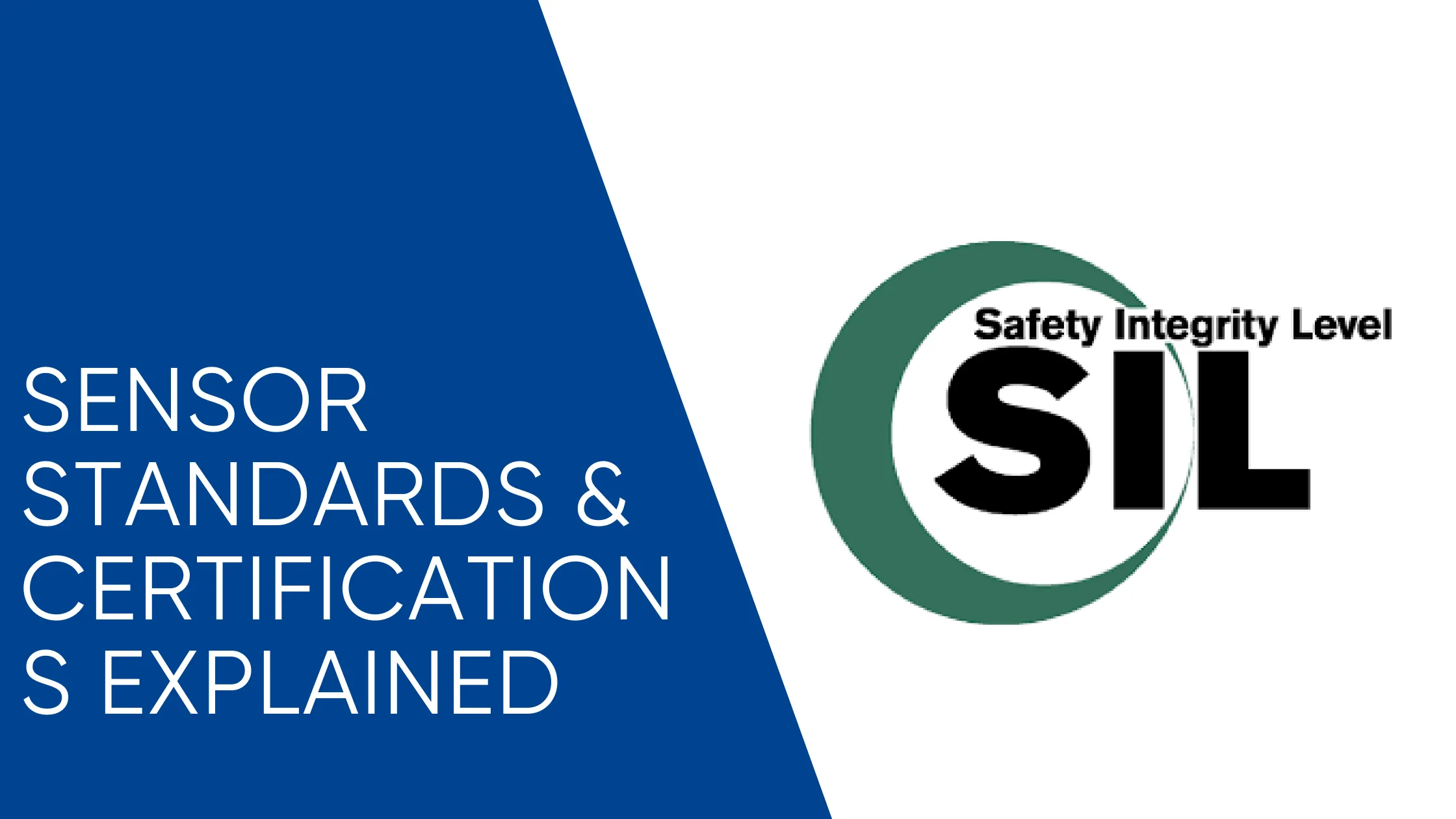
Understanding Safety Integrity Level (SIL)
If you work in oil and gas, power, or chemicals, you’ve definitely heard people shouting about "SIL ratings." But what is it?
Safety Integrity Level (SIL) is a measurement of performance, not just a quality check. It tells you the probability that a safety function (like a high-level alarm on a tank) will actually work when you need it to.
What is SIL 2 Certification?
One of the most common questions we get is, "what is sil 2 certification?" Simply put, SIL 2 means the sensor has a "Risk Reduction Factor" of 100 to 1,000. In plain English: if there’s a dangerous situation, a SIL 2 certified sensor is 100 to 1,000 times less likely to fail than a non-rated one. For most Indian process industries, SIL 2 is the "sweet spot" between high-end safety and manageable cost.
SIL Certification in India: The Current Landscape
The push for SIL Certification in India has exploded recently. Why? Because we are aligning with global markets. Whether you’re manufacturing level sensors or pressure transmitters, having that SIL Certification is no longer "optional" if you want to work with big players like ONGC or Reliance.
The process for sil certification in india involves rigorous testing of:
- PFD (Probability of Failure on Demand): How likely is it to die on you?
- SFF (Safe Failure Fraction): If it fails, does it fail "safe" or "dangerous"?
- HFT (Hardware Fault Tolerance): Can it keep working even if one internal part snaps?
Key Certifications at a Glance
When you partner with us at JR Sensors, you’re getting more than just hardware. You’re getting the peace of mind that comes with these benchmarks:
| Certification | What it covers | Why it matters for you |
| ISO 9001:2015 | Quality Management System | Ensures consistent product quality and service. |
| IATF 16949:2016 | Automotive Quality Standards | The "gold standard" for ruggedness and reliability. |
| IEC 61508 / 61511 | Functional Safety | The foundation for any Safety Integrity Level rating. |
| SIL 2 / SIL 3 | Risk Mitigation | Defines how reliable the sensor is in a crisis. |
Why Automotive Grades (IATF 16949) Matter for Industrial Use
You might think, "I'm not building a car, why do I care about automotive grades?" At JR Sensors, we comply with IATF 16949:2016 because automotive environments are brutal. They involve constant vibration, extreme heat, and moisture. By applying these standards to our industrial Sensor Technologies, we ensure our temperature probes don't just work in a lab, they work in the real, gritty world of Industrial Safety.
Common Pitfalls in Sensor Selection
I’ve seen plenty of plant managers try to save a few thousand Rupees by buying non-certified sensors. Here is the reality check:
- Compliance Gaps: If an accident happens, and your sensors weren't up to the Sensor standard, the legal and insurance fallout is a nightmare.
- Hidden Costs: Non-certified sensors often have higher "drift," meaning you’re constantly recalibrating them, which eats up your man-hours.
- False Security: Just because a sensor reads a temperature doesn't mean it will trigger a shutdown during a surge. Only a Safety Integrity Level rated device guarantees that.
The Future: Industry 4.0 and Smart Safety
The next wave of sil certification in india isn't just about "is it broken?" It's about "is it about to break?" We’re moving toward sensors that have internal AI to predict their own failure. Integrating these into your Industrial Safety plan means zero unplanned downtime.
At JR Sensors, we’re already looking ahead, blending accuracy with innovation. We don't just follow the benchmarks; we aim to set them.
Conclusion: Don't Compromise on Safety
Navigating Sensor Technologies and their endless certifications can be exhausting, but it’s the only way to protect your team and your assets. Whether you need a standard probe or a full Safety Integrity Level certified system, make sure you're asking for the paperwork.
Experience the transformative impact of JR Sensors, where accuracy meets innovation. Partner with us for state-of-the-art temperature sensor solutions that set new industry benchmarks and drive technological advancements across diverse sectors.