Side Stand Sensor Not Working in Rain? 5 Signs, Causes, Testing & Replacement
Side Stand Sensor Not Working in Rain? 5 Signs, Causes, Testing & Replacement
A motorcycle that starts normally in neutral but suddenly cuts out when you select first gear can be difficult to diagnose, especially after riding through heavy rain or muddy roads.
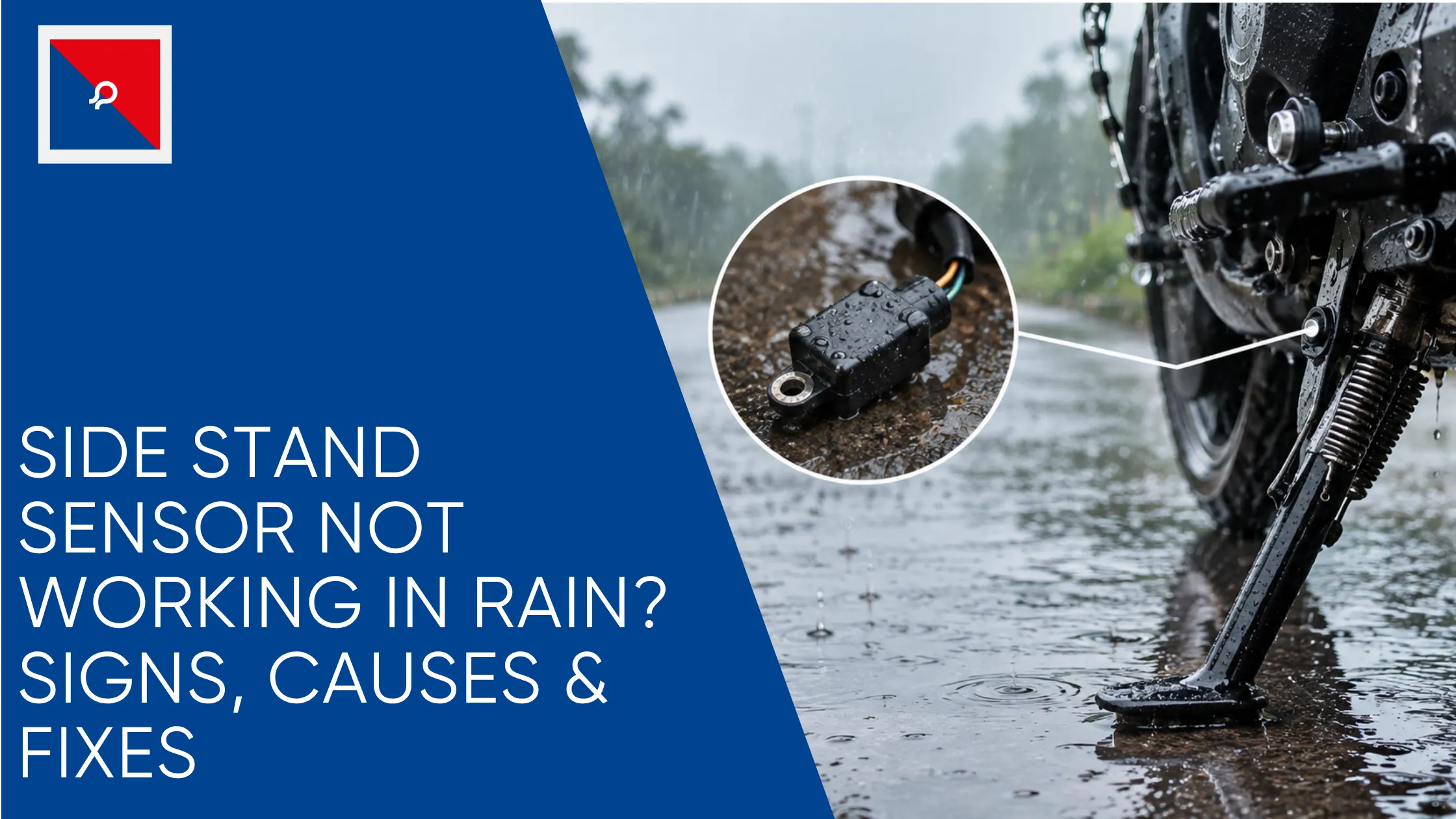
One component worth checking is the motorcycle side stand sensor, also known as a kickstand safety switch. This safety device detects whether the side stand is raised or lowered and works with the motorcycle's control or ignition system to help prevent the bike from being ridden with the stand down.
Because the sensor is located close to the road, it can be exposed to water, mud, dust, chain lubricant and road debris. Damage to the sensor, connector, wiring or mounting mechanism can cause starting problems, unexpected engine cut-outs or a side-stand warning that remains active.
In this guide, we'll explain how a motorcycle side stand sensor works, the common symptoms of a faulty sensor, why rain and dirt can cause problems, how to inspect and clean the sensor, and when professional testing or replacement may be required.
What is a Side Stand Sensor?
A motorcycle side stand sensor (also called a kickstand safety switch) is an electronic safety device mounted at the pivot point of your bike's side stand. It detects whether the stand is up or down and sends a signal to the engine ECU or ignition circuit. If you attempt to put the bike into gear while the stand is down, the sensor instantly kills the engine to prevent a dangerous crash.
If you've ever accidentally taken a sharp left turn with your side stand extended, you know the horror. The metal stand digs into the asphalt, levers the rear tyre right off the ground, and throws you into a nasty crash before you even know what happened.
To prevent this, modern motorcycle manufacturers built a safety interlock system:
It’s an ingenious safety net! But because this little switch lives right down near the asphalt, getting pounded by front-wheel splash, chain lube flinging off, and thick road mud, it takes a brutal beating every single kilometer you ride.
How Rain & Mud Trigger Side Stand Sensor Failures
Why does monsoon season cause so many common side stand sensor issues? It isn't just about getting wet. It’s about what is inside that rainwater.
1. The Slurry Effect (Water + Grit + Chain Wax)
Your front tyre continuously throws a high-pressure jet of muddy water directly at your engine case and side stand pivot. Mix that water with dirty chain grease flinging off your front sprocket, and you get a thick, cement-like paste. This paste packs tightly into the sensor's spring-loaded plunger pin, physical mechanism, or magnetic gap, physically locking it in the "stand down" position!
2. Water Ingress & Electrical Shorting
Cheap or aged rubber seals on the sensor wire harness dry out over time. When you ride through deep puddles or heavy downpours, water sneaks past the seal into the electrical connector pins. Water conducts electricity, causing a short circuit that confuses the ECU into thinking the circuit is broken.
3. Corrosion and Contact Oxidation
Inside mechanical plunger-style switches, tiny copper contact plates slide together when you raise the stand. Rainwater mixed with salt and road grime creates rapid oxidation (that nasty green corrosion). Once copper turns green, it stops conducting electricity, leading to a dead malfunctioning side stand sensor.
5 Common Symptoms of a Faulty Side Stand Sensor
How do you know the problem is actually the kickstand switch and not a dead battery, blown fuse, or ruined spark plug? Watch out for these specific side stand sensor failures behavior patterns:
1. Bike Starts in Neutral, Dies the Instant You Click Into 1st Gear
This is the ultimate textbook sign of a side stand sensor not working. Your bike starts easily in neutral, idles smoothly, but the millisecond your foot taps the gear lever into 1st gear—CLUNK—the engine shuts off instantly as if you flipped the kill switch.
2. Random Engine Cutting Out Over Bumps
Ever been cruising down the highway at 80 km/h and felt the engine abruptly drop power for half a second over a pothole or bump? If your kickstand return spring is weak or the sensor's internal spring is rusted, road bumps cause the stand to bounce slightly, tripping the sensor for a fraction of a second and jerking your ride.
3. "Side Stand" Warning Light Stuck On Dashboard
Modern digital instrument clusters have a dedicated kickstand icon or text display. If that light stays illuminated on your dash even when the stand is tucked up tight against the frame, your sensor is either mechanically stuck or shorted out internally.
4. Intermittent Starting Problems in Heavy Downpours
If your motorcycle starts completely fine on dry sunny afternoons but acts erratic, hesitates, or refuses to crank after sitting in a heavy rainstorm, water is seeping into the sensor housing or harness plug.
5. Engine Will Crank But Won't Fire
On certain motorcycle models (like many modern Royal Endfields, Hondas, and KTMs), a tripped side stand sensor completely disables the starter motor relay or cuts power to the fuel pump. You push the starter button, but nothing happens at all.
Side Stand Sensor Problems vs. Other Motorcycle Starting Issues
| Symptom Pattern | Culprit Component | Quick Test Method |
| Engine dies ONLY when clicking into 1st gear | Side Stand Sensor | Kick stand up, wiggle sensor wire, check gear cutoff |
| Bike cranks continuously but won't catch | Wet Spark Plug / Cap | Pull plug cap, wipe dry, check for spark against block |
| Clicking sound when pressing starter button | Weak / Dead Battery | Check headlight brightness while pressing starter |
| All lights completely dead, no display | Blown Main Fuse | Inspect 15A/30A main fuse under seat |
How to Inspect and Troubleshoot a Faulty Side Stand Sensor
Stranded on a rainy stretch of highway with a malfunctioning side stand sensor? Don't call a flatbed tow truck just yet! Here is how you can diagnose, clean, and temporarily fix it on the spot with basic tools.
1. Clean and Inspect the Side Stand Sensor
Put the bike on its center stand (or lean it safely against a wall). Locate the small sensor mounted right behind the side stand pivot bolt. Spray a generous amount of water-displacing spray (like WD-40) directly onto the sensor plunger pin and pivot joint to flush out mud and grit. Manually push and release the plunger pin 20 times until it bounces freely back and forth.
2. Check the Sensor Connector and Wiring
Follow the wire running up from the side stand sensor until you reach its white or black plastic connector plug (usually tucked near the lower frame tube or behind a side panel). Unplug it, check for water drops inside, blow it dry, and plug it back in firmly.
3. Emergency Bypass (When You're Truly Stranded!): SAFETY WARNING: Only use this method to ride home or to a workshop!.
If the internal contacts are completely ruined, you can bypass the sensor to trick the computer. Determine if your sensor is a 2-wire switch:
- Normally Open vs Normally Closed: Unplug the connector. Take a small metal paperclip, wire strand, or spare fuse, and jump the two pin terminals together on the main wiring harness side (not the sensor side). Secure it with electrical tape.
- If jumping the pins allows the bike to run in gear, your sensor is dead and bypassed! REMEMBER: Your safety net is now OFF, double-check your stand is UP before riding away!
How to Prevent Side Stand Sensor Problems in Monsoon
Rather than getting stuck in a pouring downpour, take 10 minutes over the weekend to waterproof your setup:
- Apply Dielectric Grease: Disconnect the sensor plug, pack the rubber weather seal with silicone dielectric grease, and snap it back together. This completely blocks water from entering.
- Clean Chain Slush Regularly: Don't let dirty chain grease pile up around your front sprocket cover. That gunk slides directly down onto the side stand switch!
- Upgrade Return Springs: If your kickstand spring is old and saggy, replace it. A snappy, tight spring prevents stand bounce over rough roads.
- Use a Waterproof Bike Cover: When parking outside during monsoons, keep direct rain off your lower frame and footpeg assembly.
Motorcycle and Automotive Sensor Solutions from JR Sensors
Whether it's harsh automotive environments, heavy-duty industrial machinery, or agricultural equipment exposed to severe weather, electronic sensors need to survive extreme conditions. Moisture, vibration, and mud shouldn't mean system failure.
At JR Sensors, we design and manufacture ultra-durable, weather-sealed Hall-effect switches, magnetic proximity sensors, and thermal monitoring solutions engineered to perform flawlessly, come rain or shine, or in thick slush. When zero downtime and rugged reliability are non-negotiable, manufacturers around the world rely on JR Sensors.