Battery temperature plays an important role in the safety, performance, and service life of modern battery systems. During charging and discharging, batteries generate heat, and excessive or uneven temperature can affect cell performance and accelerate degradation.
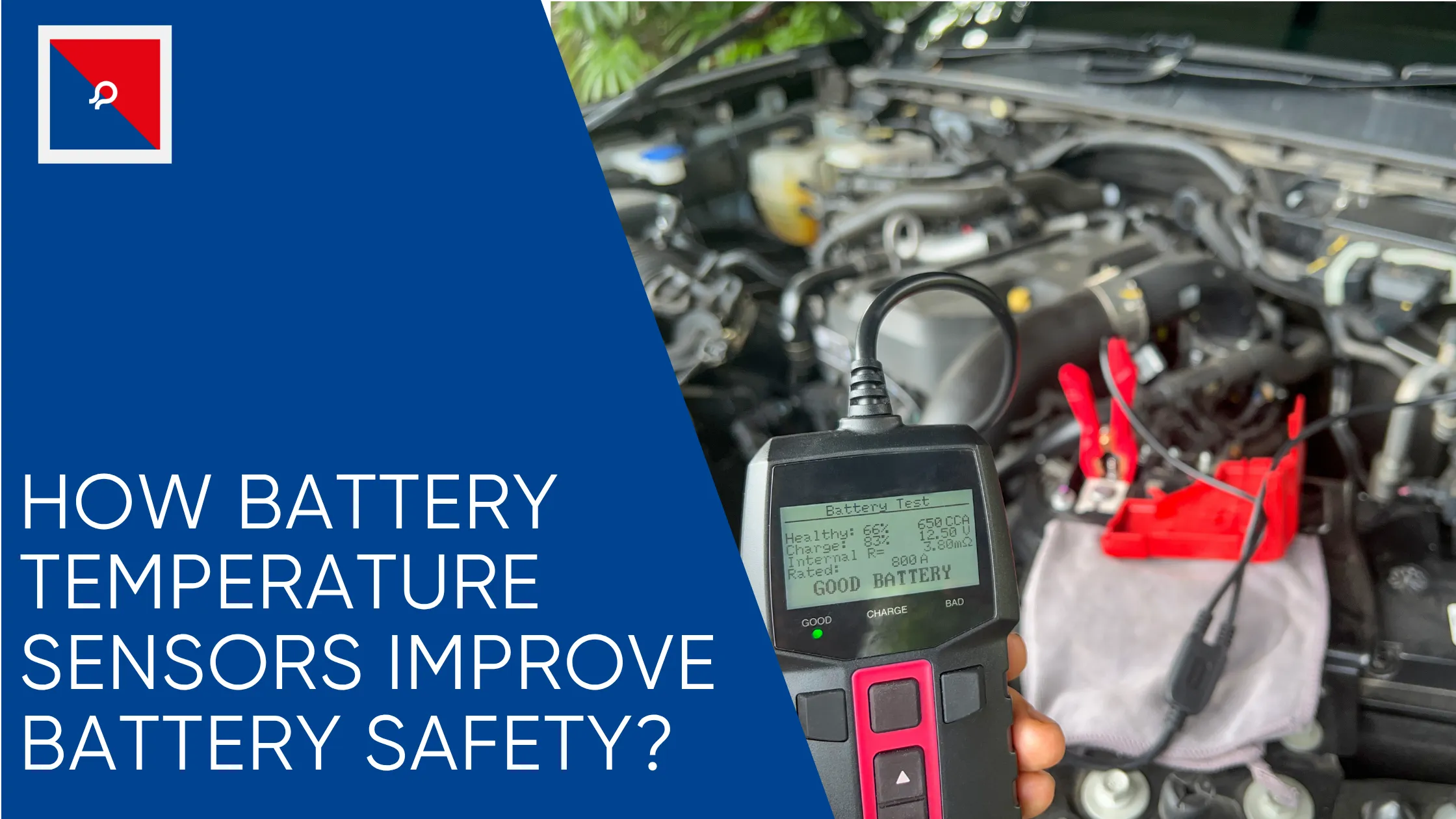
This is why battery temperature sensors are an important part of battery monitoring and protection systems. These sensors continuously measure the temperature of individual cells or battery packs and provide data to the Battery Management System (BMS). The BMS can then use this information, along with voltage and current measurements, to manage charging, discharging, and thermal protection.
From electric vehicles and solar energy storage systems to industrial UPS units and portable electronics, accurate temperature monitoring helps battery systems operate within their specified thermal limits.
In this article, we'll look at how battery temperature sensors work, their role in a BMS, and the factors to consider when selecting a sensor for a battery application.
Why Is Temperature Important for Battery Safety and Life?
Every battery chemistry has a comfortable operating range. Push it outside that range, especially on the high end, and things start to go wrong fast. Chemical reactions inside the cells speed up, internal resistance climbs, and the battery starts degrading faster than it should. Do this repeatedly over months or years, and you're looking at a battery that loses capacity well before its rated cycle life is up.
This is where a battery heat sensor earns its keep. By continuously tracking the internal temperature of a cell or pack, it gives the control electronics the information needed to slow down charging, reduce load, or shut things off entirely before damage happens. It's a bit like having a thermostat that doesn't just measure the room, it actually stops the heater before the room gets uncomfortable.
In a country like India, where ambient temperatures regularly cross 40°C in summer, this matters even more. A battery sitting in an outdoor enclosure or a poorly ventilated inverter room is already starting from a higher baseline. Add the heat generated internally during fast charging or heavy discharge, and you can see how quickly things can spiral without proper monitoring.
How Does a Battery Temperature Sensor Work?
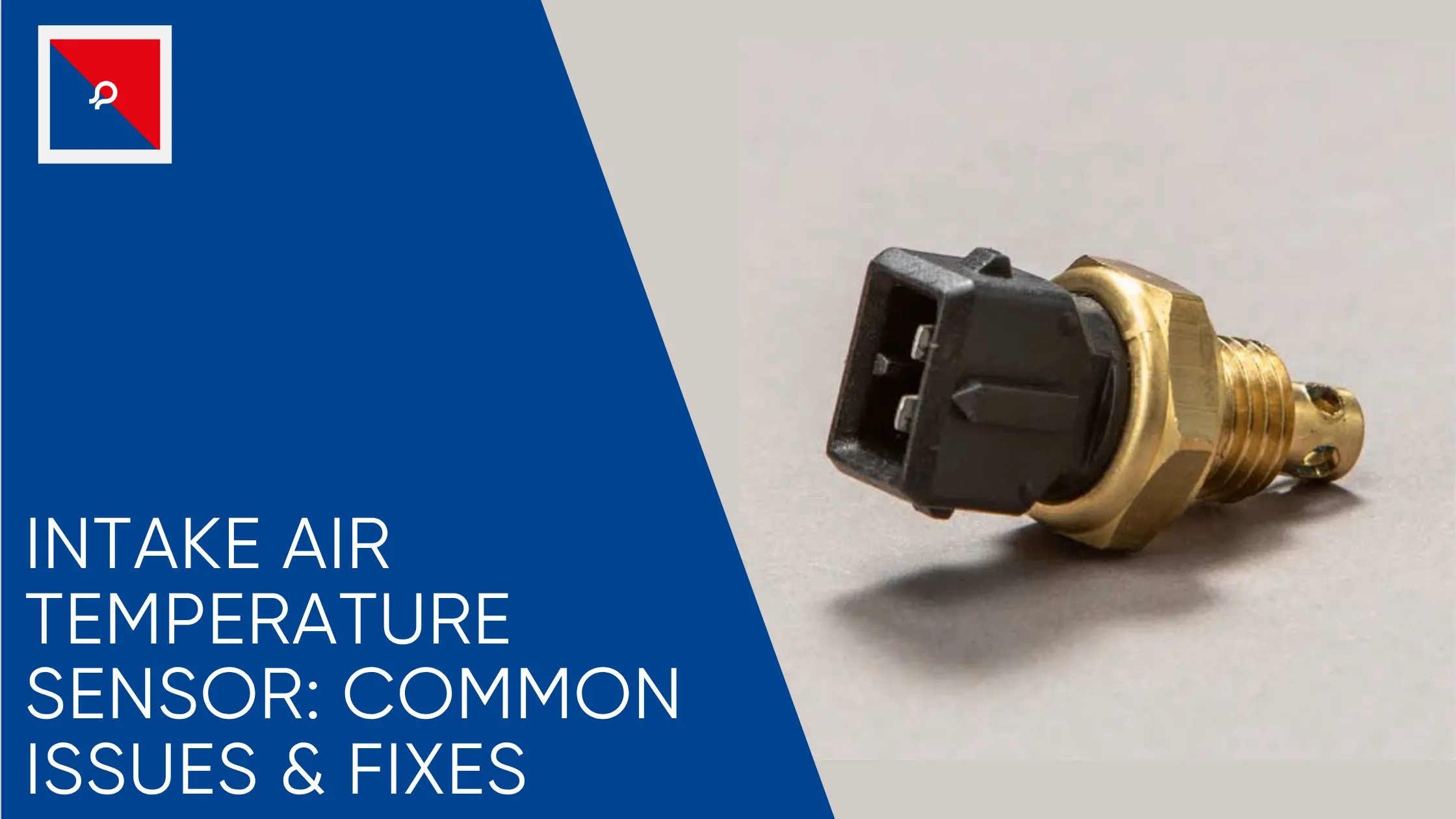
Most battery temperature sensors used today are NTC thermistors- Negative Temperature Coefficient devices that change resistance predictably as temperature rises or falls. They're compact, reliable, and inexpensive to manufacture in volume, which is why they've become the standard choice across automotive, industrial, and consumer battery applications.
The sensor is typically placed directly against or very close to the battery cells, sometimes at multiple points across a pack for larger systems like EV batteries or solar storage banks. As the resistance value changes with temperature, the reading is converted into usable data and sent to the controlling electronics. From there, decisions get made in real time, reduce current, pause charging, trigger a cooling fan, or in extreme cases, disconnect the pack entirely.
None of this works in isolation, though. The sensor is really just the eyes of the system. The brain is the battery management system, or BMS, which takes that temperature data along with voltage and current readings to decide what action to take. A good BMS paired with accurate, fast-responding sensors is what actually keeps a battery pack safe under real-world conditions, not just in a lab test.
What Is the Role of a Battery Temperature Sensor in a BMS?
It's worth spending a moment on this because people sometimes assume the sensor alone does the protecting. It doesn't. A battery management system is the coordinating layer that pulls together temperature, voltage, and current data and makes decisions based on all three at once.
Say a pack is being fast-charged on a hot afternoon.
Voltage might look fine, current draw might be within spec, but if the internal temperature is climbing too quickly, a well-designed battery management system will throttle the charge rate anyway, because it knows heat buildup at that point is a bigger risk than a slightly longer charge time. That kind of layered decision-making is only possible because the temperature sensor is feeding it accurate, real-time data.
This is also why sensor placement and quality matter so much. A sensor with a slow response time or one poorly positioned within the pack can give the BMS delayed or inaccurate readings, which defeats the whole purpose. We've seen cases where two packs using the same cell chemistry perform very differently in the field, purely because one had better thermal sensing and a tighter feedback loop with its BMS.
How Battery Temperature Monitoring Helps Extend Battery Life?
Here's the part that tends to get overlooked: thermal protection isn't only about preventing dramatic failures. Its bigger, quieter contribution is to improve battery life over the long haul.
Every charge cycle at elevated temperature causes a small amount of extra wear on the cell chemistry. It's not visible day to day, but it adds up. A pack that regularly charges or discharges at 45°C internal temperature will show measurably reduced capacity after a couple of years compared to an identical pack that's kept closer to 25–30°C through active thermal management.
So when a manufacturer says their sensors help improve battery life, this is really what they mean, a straightforward consequence of keeping the chemistry within its comfortable range for more of its operating life. Fewer cycles spent at high heat generally translates into more usable cycles overall, and a pack that holds its rated capacity for longer.
Where Are Battery Temperature Sensors Used?
A few applications where reliable temperature sensing has an outsized impact:
- EVs and hybrid vehicles — battery packs go through constant charge-discharge cycling, often in direct sun or engine bay heat, making accurate sensing essential for both safety and range retention.
- Solar and hybrid inverter storage — lithium batteries in home and commercial installations cycle daily and are frequently installed in enclosed, poorly ventilated spaces.
- Industrial UPS and backup power — these systems often sit in equipment rooms with limited airflow, and failures here can be costly well beyond just the battery replacement.
- Consumer electronics and power tools — smaller cells but tighter spaces, meaning heat has fewer places to dissipate.
In every one of these cases, the pattern is the same. A dependable battery heat sensor feeding accurate data to a well-tuned BMS is what separates a system that performs reliably for years from one that needs premature replacement or, worse, becomes a safety concern.
How to Choose a Battery Temperature Sensor for Your Application?
If you're sourcing sensors for a battery pack design, a few things are worth checking beyond just the datasheet accuracy spec:
- Response time — how quickly the sensor reacts to a temperature change, not just how accurate it is at steady state.
- Placement compatibility — does the sensor form factor suit where it needs to sit within the pack, whether that's cell-to-cell, on the busbar, or near the BMS board itself.
- Operating range — make sure it's rated comfortably beyond the expected worst-case ambient plus internal heat rise, not just the "typical" range.
- Long-term stability — a sensor that drifts over thousands of cycles will eventually feed the BMS bad data, even if it started out accurate.
None of this is complicated, but it's easy to overlook when the focus is on cell chemistry and pack design. The sensor is a small, low-cost part of the overall system, yet it's doing one of the more important jobs in keeping the whole thing safe and long-lasting.
Why Battery Temperature Sensing Matters for Battery Systems?
Battery temperature sensing is an important part of designing safe and reliable battery systems. By continuously monitoring cell or pack temperature, sensors provide the BMS with the information it needs to respond to changing thermal conditions during charging and discharging.
The sensor itself is only one part of the overall protection system, but its accuracy, response time, stability, operating range, and placement can directly affect the quality of the temperature data available to the BMS. These factors become particularly important in applications such as EV battery packs, solar energy storage, UPS systems, and other high-cycle battery applications.
When selecting a battery temperature sensor, manufacturers should therefore consider the requirements of the complete battery system rather than focusing only on nominal accuracy or cost. The right sensor should provide reliable temperature measurement while fitting the mechanical, electrical, and environmental requirements of the application.